
 Kontakt
 Ako nakupovať
Doručenie
Nákupný poradca
 Angličtina
 43 b
43 b
 Pripravujeme
 Nové
Nové
Až 30 dní na vrátenie tovaru

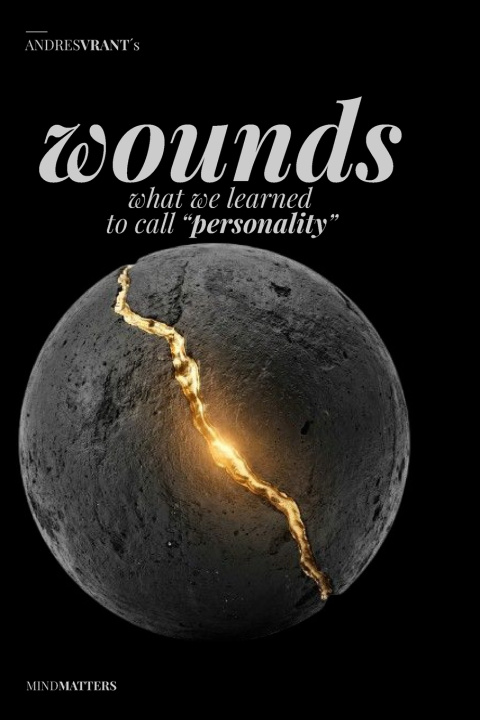
WOUNDS: WHAT WE LEARNED TO CALL "PERSONALITY"
What if some of the things you call your personality are actually things you learned to do to protect yourself?
Why do some people become perfectionists? Why do others need constant reassurance, control everything, avoid vulnerability, distrust easily, suppress their emotions, or become fiercely independent? And why can behaviors that once helped us feel safe eventually become the very things that prevent us from feeling free?
WOUNDS: WHAT WE LEARNED TO CALL "PERSONALITY" explores the invisible emotional wounds that can shape the way we see ourselves, relate to others, and navigate the world.
Inspired by the popular framework of the Five Wounds of the Soul-Rejection, Abandonment, Humiliation, Betrayal, and Injustice-this book takes a psychologically informed approach to a powerful question: what happens when an experience becomes an expectation, an expectation becomes a defense, and that defense eventually becomes part of what we call "personality"?
The book follows five stages for each wound:
THE WOUND - What happened?
The popular idea behind the wound and the emotional experience it represents.
THE EXPECTATION - What did I learn to expect?
The psychological processes through which painful experiences can influence expectations, beliefs, and perceptions.
THE ARMOR - How did I protect myself?
The strategies we develop to reduce vulnerability: perfectionism, control, avoidance, people-pleasing, emotional withdrawal, hypervigilance, self-reliance, and more.
THE CAGE - How did that protection begin limiting me?
The moment a defense stops being merely protective and becomes a repetitive pattern that affects relationships, identity, intimacy, choices, and freedom.
THE FREEDOM - How can I live differently without denying what happened?
A path toward greater self-awareness, emotional flexibility, boundaries, self-compassion, discernment, and healthier ways of relating to ourselves and others.
This is not a book about blaming the past. It is not an invitation to diagnose yourself through five labels. And it does not suggest that personality can be reduced to childhood experiences or emotional wounds. Instead, it uses the language of wounds as a starting point for exploring psychological concepts that help explain why human beings develop protective patterns-and why those patterns can persist long after the original danger has disappeared.
Because sometimes the armor works.
Until it doesn't.
The perfectionism that once earned approval can become exhaustion. The independence that once created safety can become isolation. The vigilance that once prevented betrayal can become suspicion. The need for reassurance that once protected against abandonment can become anxiety. The tendency to disappear that once protected against humiliation can become an inability to take up space.
And eventually, we may forget that these behaviors were learned.
We simply call them "who I am."
WOUNDS invites you to look again.
Not to ask, "What is wrong with me?"
But:
What happened to me?
What did I learn to expect?
How did I learn to protect myself?
When did my protection become a cage?
And who might I become if I no longer needed the armor in the same way?
Because your wounds may have influenced your story.
But they do not have to write the ending.


Informácie o knihe
Angličtina
Kategórie
