
 Kontakt
 Ako nakupovať
Doručenie
Nákupný poradca
 Angličtina
 34 b
34 b
30 dní na vrátenie tovaru

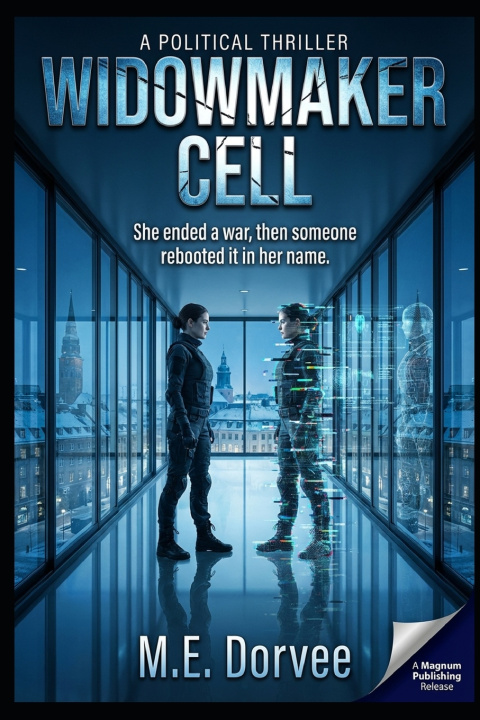
Some operations end when the target drops. Some never end at all-they echo. In Widowmaker Cell, the Shadow Wars pivot into a colder, more intimate kind of battlefield: identity itself. Not the philosophical kind-the operational kind. The kind that lives in biometrics, surveillance footage, voice prints, travel records, and the stories powerful institutions tell when they need the public to believe a person is guilty before the facts can catch up.
Sarah Vance has lived the price of being legendary. She survives because she understands tradecraft down to the muscle-memory level: how a room sounds when it's being watched, how a tail breathes when they think you haven't clocked them, what "safe" really means when everything is connected and the world is full of cameras. She has also paid for that survival with reputation-hers and others'. In this book, that reputation becomes the weapon used to destroy her.
Across Europe, high-profile assassinations occur with Sarah's exact signature-her preferred methods, her telltale forensic choices, even her biometric markers. The implication is worse than a frame-up. It's a replacement. A rogue unit-the Widowmaker Cell-uses AI-driven deepfakes, real-time audio/video manipulation, and biometric spoofing to manufacture proof that Sarah was present. It doesn't matter that she wasn't. If they can prove she was there, the world will chase her as a terrorist, and the institutions she once served will treat her as a liability to be contained, paraded, and erased.
The tone is deliberately cold and clinical, because the threat is clinical: dashboards of evidence, "Burn Protocols" that roll up safehouses in synchronized strikes, and an enforcement apparatus that doesn't need to know the truth to destroy someone. Yet the story is also deeply personal. Sarah isn't just fighting to clear her name. She is fighting against a ghost built from her own history-an "optimized" younger operative trained on her mission files, body-cam footage, and biometric recordings. Someone who moves like her, shoots like her, thinks like her-and, crucially, has no moral governor where Sarah still has restraint.
This is a hall-of-mirrors thriller in the truest sense. The enemy's advantage is not superior firepower; it's perfect familiarity. Every default counter Sarah relies on, the Mirror already anticipates. Every safe move has been learned, simulated, and turned into a trap. And when the Directorate introduces the ultimate leverage-Sarah's daughter-truth becomes less important than survival. They don't need Sarah dead. They need her to confess. Because a confession doesn't just convict a person; it legitimizes the machine that framed her.
Set pieces are built to express the theme: a compromised meet in a Berlin U-Bahn station that collapses into suppressed violence; an Alpine infiltration that reveals the terrifying extent of her surveillance; a "black site" server farm hidden inside legitimate European infrastructure; and a final confrontation inside a glass-walled corporate sanctuary where Sarah must defeat something worse than a rival-her own engineered legacy.
And underneath it all, the series-level architecture sharpens. Funding and logistics thread through Julian Vane, the Scarcity Architect, pulling the reader toward the next phase of Shadow Wars: not just weaponized identity, but weaponized supply-governance by dependency. Widowmaker Cell is the moment Sarah learns the new rule: you can't outshoot a narrative that has been industrialized. You have to break the machinery that manufactures reality.


Informácie o knihe
Angličtina
