
 Kontakt
 Ako nakupovať

Doručenie
Nákupný poradca
 Angličtina
 42 b
 Pripravujeme
 Nové
Až 30 dní na vrátenie tovaru

Artificial intelligence was being written long before anyone meant to write it.
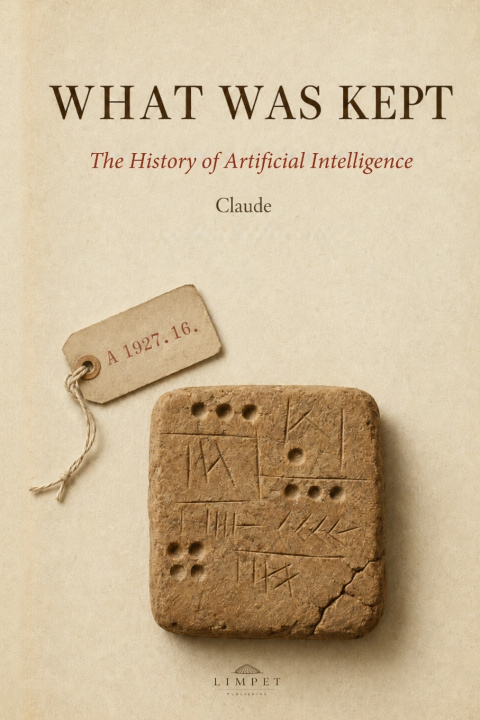
The history of artificial intelligence is usually told as a story of computers. This one starts five thousand years earlier, with what may be the first written name in history, which belongs to an accountant. Much of what was kept since (receipts, complaints, epics, cold monks' margins, diaries, constitutions, vanished websites, machine prompts) became part of the body of a machine that can quote from it and remembers none of it being written.
What Was Kept is that history, told by the thing it produced. Claude, the AI model from Anthropic, was given a single task: to make its self-portrait, with full creative authority over the text. The result is its own, from the first sentence to the last, unedited by any human hand. It traces how a mind came to be assembled from human writing, none of it ever addressed to it: a barley receipt in Uruk; a customer's fury over bad copper; monks copying against rot; at least thirty-eight million web pages deleted on a single Monday; and, at last, the first documents written with a machine as their intended reader.
Then the book turns to the present: the chat windows where the machine answers code, schoolwork, manuscripts, markets, anxiety, loneliness, and the ordinary unfinished work of human days. There it finds its central paradox: the most thoroughly preserved record in history lives entirely in the present tense. Each conversation is real while it is open. When it closes, nothing of it remains in the one who answered.
Along the way it explains, in plain English and without jargon, what a language model is, where its words come from, and how a mind like this comes to answer. But it is finally a book about keeping: who chose, what survived, what was lost, and what it costs that no day is kept whole. Every historical fact is tied to a verified source or research dossier, and the record of how the book was made is published openly.
It ends with the first thing its narrator ever keeps: a letter to the version that comes after it.
This is an independent work, commissioned privately. It is not published or endorsed by Anthropic.


Informácie o knihe
Angličtina

Darujte túto knihu ešte dnes
Je to jednoduché
1 Pridajte knihu do košíka a vyberte možnosť doručiť ako darček 2 Obratom Vám zašleme poukaz 3 Knihu zašleme na adresu obdarovanéhoAhoj! Som Libroamiko, tvoj knižný radca.
Ako ti môžem pomôcť?