
 Kontakt
 Ako nakupovať
Doručenie
Nákupný poradca
 Angličtina
 39 b
39 b
30 dní na vrátenie tovaru

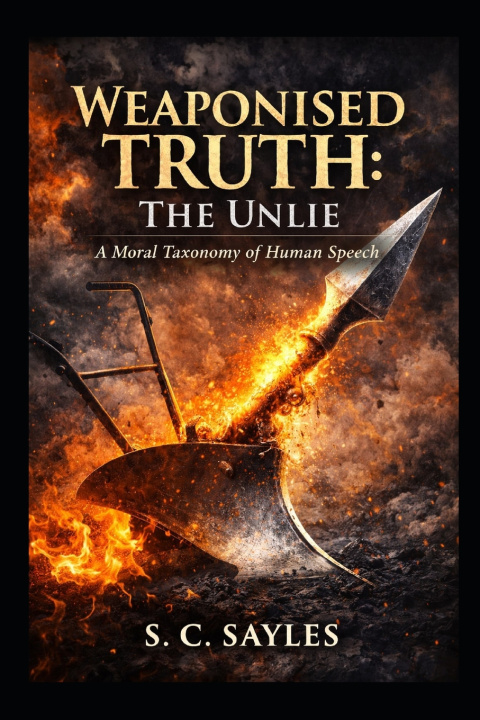
What if the most dangerous form of deception is not the lie-but the truth?
In Weaponised Truth: The Unlie - A Moral Taxonomy of Human Speech, S. C. Sayles unveils a groundbreaking framework that exposes a form of deception almost entirely overlooked in philosophy, theology, ethics, and public discourse. For centuries, moral thinkers have treated truth and falsehood as the decisive categories of speech, condemning lies and celebrating truthfulness. But this binary has blinded us to a far more pervasive and destructive form of distortion: the unlie-a true statement spoken with the intent to deceive.
Drawing on Scripture, classical philosophy, modern linguistics, cognitive psychology, and the history of political propaganda, Sayles constructs the first comprehensive taxonomy of human speech based on intention and accuracy. At its centre stands The Moral Square of Opposition, a structural transformation of Aristotle's ancient logical square, now recast as a map of the human heart in communication. The four modes of speech-truth, untruth, lie, and unlie-are revealed not as a spectrum but as a moral architecture defining the soul's posture toward reality, neighbour, and God.
With clarity and authority, Sayles shows how modern society has not become "post-truth," but has shifted from the crude lie to the much more effective unlie. Political institutions, media systems, corporations, and even personal relationships now rely on technically accurate speech deployed to mislead. The unlie has become the dominant deception strategy of the age.
Weaponised Truth exposes how this shift has reshaped public life, corroded trust, and disintegrated moral clarity. Yet the book is not merely diagnostic-it is restorative. By integrating biblical theology, philosophical anthropology, virtue ethics, and linguistic analysis, Sayles offers a path toward the recovery of truthful speech grounded in sincerity, integrity, and moral correspondence to reality.
Profoundly original and urgently needed, this book provides:
- A rigorous taxonomy of moral speech never before articulated
- A devastating critique of modern deceptive practices
- A theological and philosophical account of why intention is central to moral speech
- Case studies showing the unlie at work in politics, media, institutions, and pastoral life
- A vision of truthfulness that heals the soul and restores clarity to human communication
And it is a call to reclaim truth-not merely as accuracy, but as a virtue of the heart.
Weaponised Truth will appeal to readers of ethics, theology, philosophy, media studies, and anyone seeking to understand the forces shaping modern communication. It is a landmark contribution and a foundational text for the next generation of moral thought


Informácie o knihe
Angličtina
