
 Kontakt
 Ako nakupovať
Doručenie
Nákupný poradca
 Angličtina
 22 b
22 b
30 dní na vrátenie tovaru

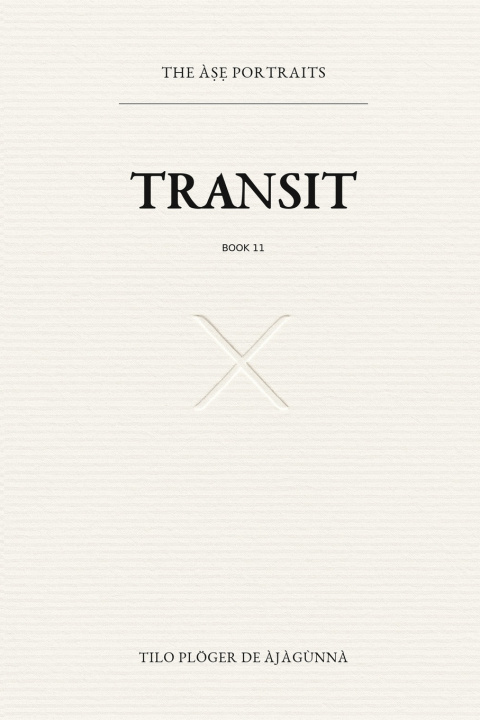
TRANSIT
A novel about what happens when movement itself becomes a form of possession.
A woman arrives in a European city with a suitcase, a temporary sublet, and a promise: You can stay, as long as you don't leave a trace. What begins as a practical month between places slowly turns into an audit of her entire life in transit. An airline profile demands an "Address while travelling." The landlord prohibits her name on the mailbox. The post office will not forward a simple letter without proof that she lives somewhere she is forbidden to appear. A locker service offers a rented address, a place where consequences can be delivered on her behalf.
At every counter, desk, and platform, the same logic repeats in different forms: you may move, as long as you remain legible. As the days pass, the narrator learns the new grammar of belonging: deposits that stay "under review," emails written like friendship but structured like insurance, notices taped to glass with a white cross of adhesive. Every attempt to stay unanchored becomes another entry in the city's record of her. The question is no longer Where do you live? but Where are you allowed to exist on paper?
Readers familiar with Yoruba / Orisha and Ifá traditions will recognise the series' quiet backbone: the principle of àṣẹ - the force and pressure through which events take shape - and the way each volume is tuned to a particular Òrìṣà logic, but the book reads just as well if you simply follow one woman's month in a city that behaves like an intelligence. In TRANSIT, that pressure is mapped to the Odù Ìká and moves especially through the orbit of Òṣùmàrè, the rainbow current of continuous change and circulation: it appears in arcs, bridges, cables and repeated crossings rather than in shrines and altars, making the spiritual question present without ever requiring belief or prior knowledge.
Perfect for readers who appreciate:
• Literary fiction that lives in airports, waiting rooms, corridors and lobbies
• The quiet tension of Rachel Cusk, Deborah Levy, and Jenny Offill
• Novels where the city behaves like an intelligence and bureaucracy is the real antagonist
• Stories about migration, housing, precarity and the unsayable word we use for belonging
TRANSIT is Book 11 of THE ÀṢẸ PORTRAITS - a stand-alone novel in a 17-book cycle where movement has become both our freedom and our most expensive habit.


Informácie o knihe
Angličtina
