
 Kontakt
 Ako nakupovať
Doručenie
Nákupný poradca
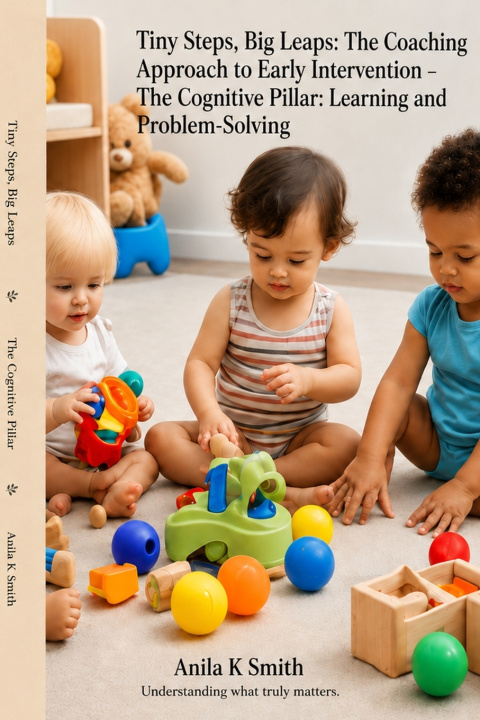
Tiny Steps, Big Leaps
: The Coaching Approach to Early Intervention - The Cognitive Pillar: Learning and Problem-Solving.
 Angličtina
 25 b
25 b
 Pripravujeme
 Nové
Nové
Až 30 dní na vrátenie tovaru

"What if the hardest part of supporting your child's development is not knowing what to trust?"
One milestone chart says your child should already be doing more.
Another parent's toddler seems ahead.
A late-night search produces ten different answers.
And suddenly you are no longer simply watching your child grow-you are wondering whether you are **missing a sign, falling behind, or failing to do enough**.
"Tiny Steps, Big Leaps: The Coaching Approach to Early Intervention - The Cognitive Pillar: Learning and Problem-Solving" was written for parents and caregivers caught between wanting to support development and feeling overwhelmed by the pressure to get everything right.
This book does not hand you another rigid checklist.
Instead, it helps you develop a clearer lens for recognizing the learning already happening in front of you-from sensory exploration and object permanence to cause-and-effect discovery, pretend play, problem-solving, and early academic readiness. The guide emphasizes looking at the child in front of you rather than constantly measuring them against another child or an impersonal chart.
Inside, you will learn how to:
- Move beyond the **comparison trap** and recognize progress within your child's own developmental path
- Filter the **information avalanche** of apps, articles, online advice, and conflicting milestone expectations
- Replace anxious monitoring with more purposeful **watching, wondering, and noticing**
- Understand what ordinary play can reveal about how your baby or toddler is thinking and learning
- Support sensory development without expensive toys or elaborate activities
- Encourage object permanence, cause-and-effect learning, problem-solving, and symbolic play through everyday routines
- Introduce colors, numbers, letters, and early learning without turning childhood into academic pressure
- Recognize when a developmental pause may call for patience-and when a concern may be worth discussing with a professional
- Work with early-intervention and developmental professionals as a "partner rather than a passive recipient of instructions."
- Celebrate growth without expecting development to happen in a perfectly straight line
The book's coaching model is built around a simple idea: families do not need experts to take over; they need knowledgeable professionals who can **come alongside them**, help interpret what they are seeing, and support practical next steps that fit real family life.
Your child does not need a perfect parent, a perfectly organized learning environment, or a parent who has memorized every milestone.
They need someone who is present enough to notice.
Curious enough to wonder.
Confident enough to encourage.
And supported enough to know when to ask for help.
Stop measuring every moment against someone else's timeline.
Start seeing the learning already happening.
Support the tiny steps-and recognize the big leaps hiding inside them.


Informácie o knihe
Angličtina

Darujte túto knihu ešte dnes
Je to jednoduché
1 Pridajte knihu do košíka a vyberte možnosť doručiť ako darček 2 Obratom Vám zašleme poukaz 3 Knihu zašleme na adresu obdarovanéhoAhoj! Som Libroamiko, tvoj knižný radca.
Ako ti môžem pomôcť?