
 Kontakt
 Ako nakupovať
Doručenie
Nákupný poradca
Timeblindness
A Neurocognitive Framework: The First Comprehensive Model of Timeblindness and Temporal Cognition
 Angličtina
 59 b
59 b
30 dní na vrátenie tovaru

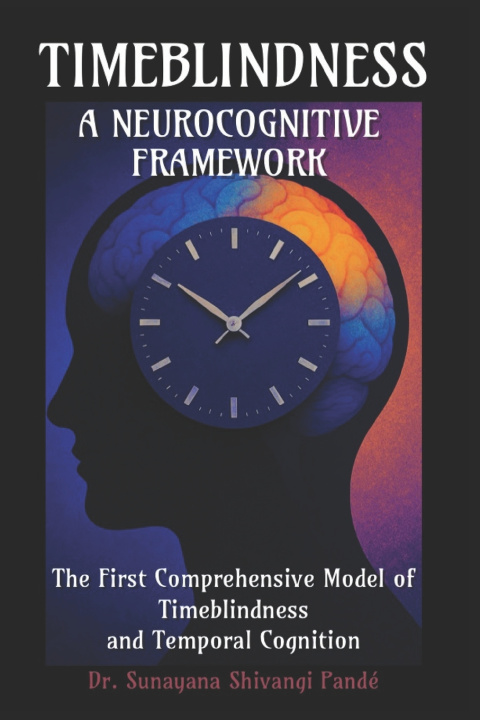
Timeblindness: A Neurocognitive Framework
The First Comprehensive Model of Timeblindness and Temporal Cognition
Time is the silent architecture beneath every human function-yet psychology has never treated it as a domain of its own. Timeblindness: A Neurocognitive Framework is the first book in history to define, systematize, and formalize the science of temporal cognition. In this groundbreaking work, Dr. Sunayana Pandé introduces a unifying model that integrates neuroscience, psychology, development, neurodiversity, sensory processing, executive functioning, and lived experience into a single, cohesive discipline.
This book demonstrates that timeblindness is not a character flaw or motivational deficit but a measurable cognitive profile rooted in neural timing, predictive processing, memory sequencing, sensory gating, and future-mapping systems. It offers the first diagnostic architecture for temporal impairment, the first developmental model of temporal emergence, and the first cross-disorder comparison illustrating how timeblindness appears in ADHD, autism, trauma, dissociation, giftedness, chronic illness, and nonlinear awareness states.
Written with academic rigor yet accessible to clinicians, educators, families, and policymakers, this text provides:
A full theoretical model of how the brain constructs time
Scientific explanations for timeblindness across diagnoses
Temporal signatures for assessment and intervention
Developmental timelines of temporal cognition
The first clinically applicable tools for identifying temporal disability
Accommodation and support systems for schools, workplaces, and healthcare
Policy recommendations to recognize timeblindness as a legitimate cognitive disability
With clarity, authority, and compassion, Timeblindness: A Neurocognitive Framework establishes the field of temporal cognition and positions Dr. Pandé as its founder. This book is poised to reshape clinical practice, educational systems, disability law, and the global understanding of neurodiversity.


Informácie o knihe
Angličtina
