
 Kontakt
 Ako nakupovať
Doručenie
Nákupný poradca
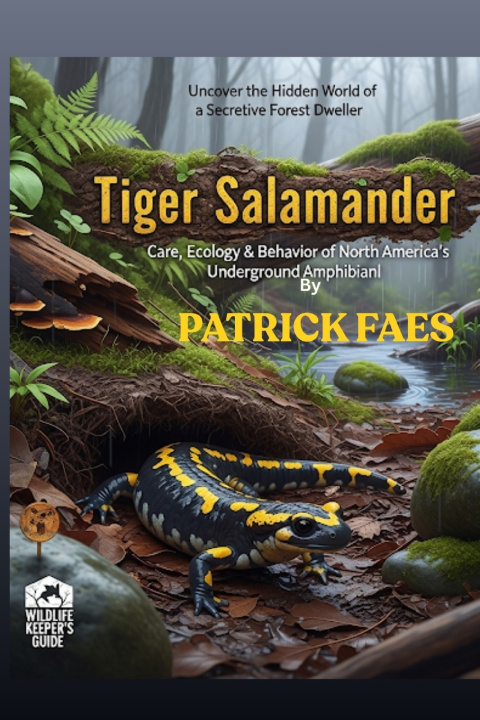
TIGER SALAMANDER
Care, Ecology & Behavior of North America's Underground Amphibianl
 Angličtina
 34 b
34 b
Až 30 dní na vrátenie tovaru

The Tiger Salamander (Ambystoma tigrinum) is one of North America's most recognizable amphibians, noted for its striking coloration, robust body, and dual aquatic-terrestrial lifestyle. Belonging to the family Ambystomatidae, commonly known as mole salamanders, this species demonstrates remarkable adaptations for burrowing, hunting, and surviving in fluctuating environments.
This classification reflects the Tiger Salamander's evolutionary relationships with other amphibians. Within the genus Ambystoma, it is closely related to other mole salamanders, such as the Spotted Salamander (Ambystoma maculatum) and the Barred Tiger Salamander (Ambystoma mavortium), sharing similar burrowing behavior, larval development, and habitat requirements.
This classification reflects the Tiger Salamander's evolutionary relationships with other amphibians. Within the genus Ambystoma, it is closely related to other mole salamanders, such as the Spotted Salamander (Ambystoma maculatum) and the Barred Tiger Salamander (Ambystoma mavortium), sharing similar burrowing behavior, larval development, and habitat requirements.
Key Characteristics and Ecological Role
Nocturnal and secretive: Tiger Salamanders are primarily active at night, emerging from burrows or shelters to hunt insects, worms, and small invertebrates.
Amphibious life cycle: They possess both aquatic larval and terrestrial adult stages, making them highly adaptable to seasonal environmental changes.
Keystone species: As both predator and prey, they regulate invertebrate populations and provide food for birds, mammals, and other amphibians.
Indicator species: Sensitive to pollutants, habitat changes, and climate fluctuations, their presence or absence signals ecosystem health.


Informácie o knihe
Angličtina

Darujte túto knihu ešte dnes
Je to jednoduché
1 Pridajte knihu do košíka a vyberte možnosť doručiť ako darček 2 Obratom Vám zašleme poukaz 3 Knihu zašleme na adresu obdarovanéhoAhoj! Som Libroamiko, tvoj knižný radca.
Ako ti môžem pomôcť?