
 Kontakt
 Ako nakupovať

Doručenie
Nákupný poradca
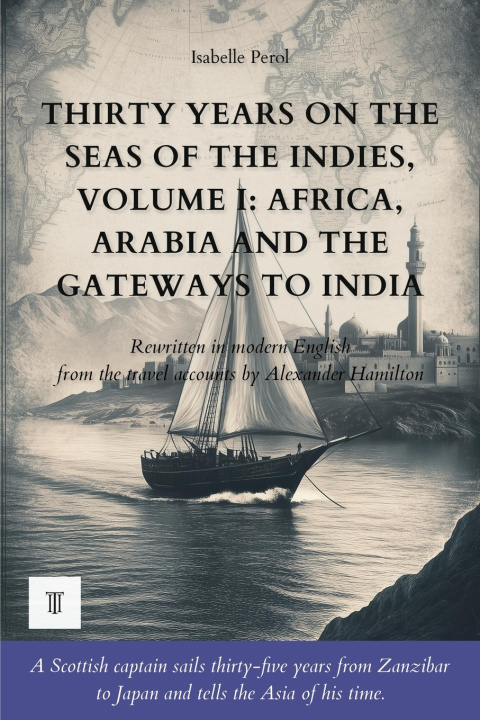
Thirty Years on the Seas of the Indies, Volume I
Africa, Arabia, and the Gateways to India. Alexander Hamilton's travel accounts, rewritten in modern English (1688-1723)
 Angličtina
 35 b
 Nové
Až 30 dní na vrátenie tovaru

Around 1688, a young Scottish merchant sets sail for the East Indies. He will remain there for more than thirty years, from the Cape of Good Hope to the gateways of the Great Mughal.
Alexander Hamilton is neither a scholar nor a conqueror: he is a captain, a trading man who saw everything with his own eyes. The salt currency of the Christian kingdom of Abyssinia, the largest coffee market in the world, the towers where the Parsis deliver their dead to the birds, the pearls of Bahrain, the carnelians of Cambay. But also shipwrecks on cannibal coasts, Gujarat pirates who drink before boarding, the fall of Isfahan under the blows of Mirwais, and the reckless war that the English Company dares to declare on the emperor Aurangzeb.
From his quarterdeck, this frank and curious witness paints the portrait of an Indian Ocean still half guessed at, where declining Portuguese, conquering Arabs, and European companies fight over ports, routes, and cargoes. This first volume follows the great outward diagonal: from the Cape to the East African coast, from Christian Abyssinia to the coffee ports of the Red Sea, from Muscat and the Persian Gulf to the gateways of the Great Mughal, Sindh, Gujarat, Surat, and Bombay.
He does not yet know it: what he describes here are the first steps of an empire. The narrative culminates in the war of Bombay between the English East India Company and the emperor Aurangzeb, an episode in which the young Europe measures for the first time the true size of the Mughal giant.
The volume opens on a world in the midst of upheaval: the Portuguese lose Muscat and their trading posts to the Arabs of Oman, Safavid Persia collapses under the blows of Mirwais, whose siege of Gombroon and capture of Isfahan Hamilton follows closely, while the empire of the Great Mughal shines with its last brilliance under Aurangzeb. A merchant free of any company, Hamilton assesses ports, currencies, and customs with the same frankness, reporting the schemes of governors as readily as the ways of peoples: it is this freedom of tone, rare for the period, that makes his account a firsthand source on the Indian Ocean at the turn of the eighteenth century.
The first complete modern rewriting for today's reader, making this account accessible without betraying anything of the original. Twenty-one original illustrations and redrawn maps bring the route to life, while a set of reference materials (glossary, chronology, index, further reading, editor's note, afterword) and selected passages from the original text accompany the reading.


Informácie o knihe
Angličtina

Darujte túto knihu ešte dnes
Je to jednoduché
1 Pridajte knihu do košíka a vyberte možnosť doručiť ako darček 2 Obratom Vám zašleme poukaz 3 Knihu zašleme na adresu obdarovanéhoAhoj! Som Libroamiko, tvoj knižný radca.
Ako ti môžem pomôcť?