
 Kontakt
 Ako nakupovať
Doručenie
Nákupný poradca
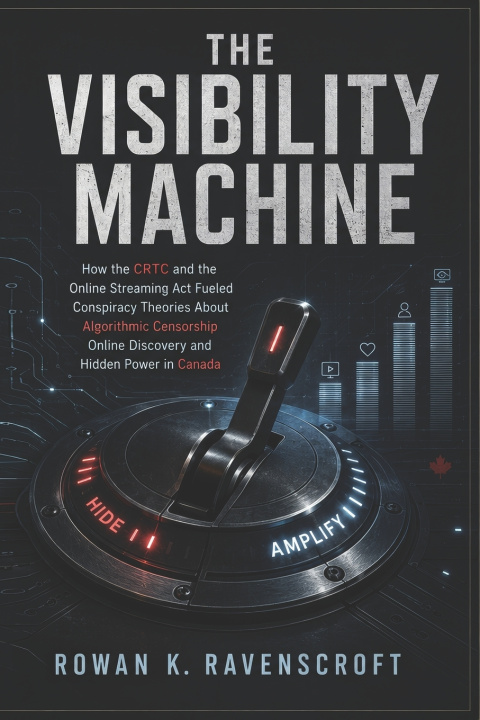
The Visibility Machine
How the CRTC and the Online Streaming Act Fueled Conspiracy Theories About Algorithmic Censorship Online Discovery and Hidden Power in Canada
 Angličtina
 41 b
41 b
 Nové
Nové
30 dní na vrátenie tovaru

In the platform age, speech can remain available and still become hard to find.
The Visibility Machine is an investigative nonfiction book about the CRTC, the Online Streaming Act, Canadian cultural policy, online discoverability, and the public suspicion that grew around platform visibility in Canada. It examines how a law publicly framed as broadcasting modernization became the center of a larger argument about censorship, digital power, creator reach, and hidden influence inside systems most users cannot inspect.
The book does not ask readers to accept a conspiracy on faith. It builds the case file carefully, separating verified facts from allegations, stronger concerns from weaker claims, and statutory language from viral interpretation. The central issue is not whether the public record proves a secret political suppression system. The sharper question is whether a regulator can shape visibility without ordering classic censorship.
Canada's official case is treated seriously. The book explains the cultural-sovereignty argument behind the Online Streaming Act: the belief that large online services profiting from Canadian audiences should contribute to a system that supports Canadian stories, Indigenous content, French-language production, local news, official-language minority communities, and diverse creators. That rationale matters. So do the safeguards: users are not automatically treated as broadcasters, and the regulator cannot require a specific source-code design.
But the record does not end there.
The Visibility Machine follows the pressure points that keep the controversy alive: discoverability, presentation, metadata, homepage prominence, recommendation pathways, reporting duties, contribution obligations, platform incentives, independent creators, podcast visibility, social-media boundaries, legacy media gravity, and the missing public data that would help settle the dispute. What does "user choice" mean when the menu has already been arranged? What happens when cultural policy enters the machinery that decides what rises before the public?
This is a case file about visibility, power, and the modern gate.
Across its chapters, the book tracks the old broadcasting system, the rise of platform distribution, the legal trapdoors critics worry about, the official limits defenders rely on, the money trail behind contribution rules, the creator problem, the narrative war between "modernization" and "censorship," and the unfinished record that still prevents a clean conclusion.
Readers can expect a restrained, skeptical, evidence-conscious investigation. The book uses evidence grades, chronology dockets, claim separation, and counter-evidence to keep the analysis grounded. It does not treat opacity as proof of wrongdoing. It also does not treat official reassurance as the same thing as technical transparency.


Informácie o knihe
Angličtina

Darujte túto knihu ešte dnes
Je to jednoduché
1 Pridajte knihu do košíka a vyberte možnosť doručiť ako darček 2 Obratom Vám zašleme poukaz 3 Knihu zašleme na adresu obdarovanéhoAhoj! Som Libroamiko, tvoj knižný radca.
Ako ti môžem pomôcť?