
 Kontakt
 Ako nakupovať
Doručenie
Nákupný poradca
 Angličtina
 42 b
42 b
 Nové
Nové
Až 30 dní na vrátenie tovaru

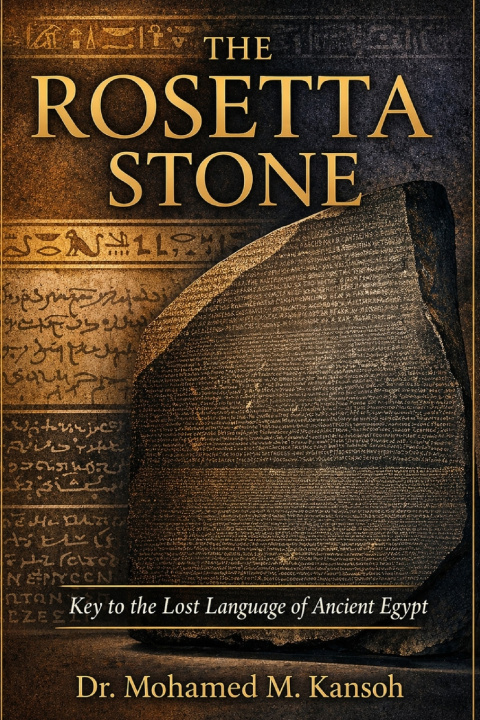
For more than a thousand years, the language of ancient Egypt lay silent-its monuments covered in writing that no one could read. Temples spoke in images without sound, and one of humanity's greatest civilizations remained locked behind an undeciphered script. Everything changed with the discovery of the Rosetta Stone.
Carved in 196 BCE as a royal decree in honor of a young Ptolemaic king, the Rosetta Stone preserved the same text in three scripts: hieroglyphic, Demotic, and Greek. This extraordinary convergence provided the key that finally unlocked the ancient Egyptian language and gave birth to modern Egyptology.
In The Rosetta Stone: Key to the Lost Language of Ancient Egypt, Dr. Mohamed M. Kansoh presents a comprehensive and authoritative account of the stone's history, discovery, and decipherment. Tracing its origins in Ptolemaic Egypt, its accidental rediscovery during Napoleon's Egyptian campaign, and its role in the groundbreaking work of Thomas Young and Jean-François Champollion, this book explains not only what was deciphered, but how and why it mattered.
With clear explanations of hieroglyphic, Demotic, and Greek writing systems, annotated interpretations of the Decree of Memphis, and carefully structured appendices-including a full English translation, script comparison tables, glossary, and timeline-this volume offers readers an unparalleled guide to one of history's greatest intellectual breakthroughs.
Written in an accessible yet scholarly style, this book is ideal for general readers, students, historians, linguists, and anyone fascinated by ancient Egypt. More than the story of a stone, it is the story of how a lost civilization found its voice again.


Informácie o knihe
Angličtina
