
 Kontakt
 Ako nakupovať
Doručenie
Nákupný poradca
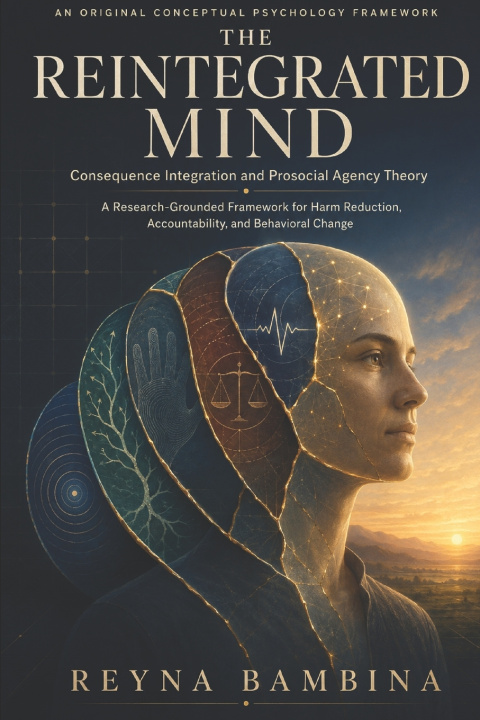
THE REINTEGRATED MIND
Consequence Integration and Prosocial Agency Theory A Research-Grounded Framework for Harm Reduction, Accountability, and Behavioral Change
 Angličtina
 97 b
97 b
 Pripravujeme
 Nové
Nové
Až 30 dní na vrátenie tovaru

Can a person understand rules, recognize another person's fear, and predict the consequences of an action-yet still choose to cause harm?
In The Reintegrated Mind, Reyna Bambina introduces Consequence Integration and Prosocial Agency Theory (CIPAT), an original conceptual framework exploring why moral knowledge does not always become responsible behavior. Rather than viewing conscience as a single feeling that someone either possesses or lacks, CIPAT presents moral agency as a collection of psychological abilities that must work together at the moment of choice.
The book identifies six proposed integration failures: Narrowed Salience, Consequence Simulation Failure, Ownership Unbinding, Reward Dominance and Future Discounting, Inhibitory Control Under Heat, and an Unstable Prosocial Identity. These weak connections may allow immediate reward, dominance, grievance, stimulation, or escape to outweigh another person's rights and foreseeable consequences.
Reyna also introduces the Prosocial Agency Integration Protocol (PAIP), a proposed nine-phase clinical research model focused on behavioral stabilization, attention widening, consequence rehearsal, personal ownership, reward redesign, impulse control, consent, reciprocal relationships, restitution, and relapse prevention. Its goal is not to produce a convincing performance of remorse or promise a personality "cure." Its standard is observable and sustained change: fewer harmful actions, greater honesty, respected boundaries, lawful behavior, reliable consent, and accountability that continues when supervision is absent.
With fictional composite cases, cognitive and behavioral exercises, a proposed 24-week framework, coping methods, ethical safeguards, and directions for future research, the book offers cautious hope without romanticizing risk. It respects the dignity of people with difficult psychological traits while affirming that victims and families never owe access, forgiveness, treatment participation, or responsibility for another person's rehabilitation.
The Reintegrated Mind presents a humane but uncompromising vision of change. Emotional empathy may remain limited and risk may never disappear completely, but greater agency can still be built when attention, consequences, ownership, restraint, and identity are deliberately reconnected. A respected refusal, an interrupted act of violence, an honest disclosure, or one less person harmed is not a small result-it is meaningful change.


Informácie o knihe
Angličtina

Darujte túto knihu ešte dnes
Je to jednoduché
1 Pridajte knihu do košíka a vyberte možnosť doručiť ako darček 2 Obratom Vám zašleme poukaz 3 Knihu zašleme na adresu obdarovanéhoAhoj! Som Libroamiko, tvoj knižný radca.
Ako ti môžem pomôcť?