
 Kontakt
 Ako nakupovať
Doručenie
Nákupný poradca
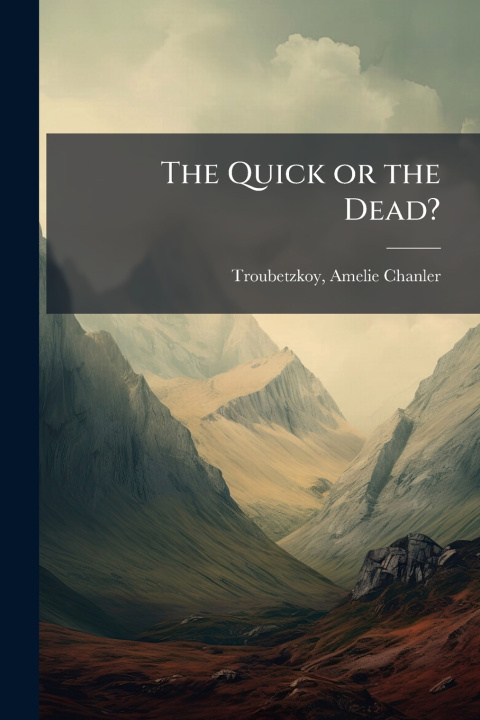
The Quick or the Dead?
 Angličtina
 45 b
45 b
Až 30 dní na vrátenie tovaru

"The Quick or the Dead?" by Amelie Rives, originally published in 1888, is a captivating novel exploring themes of love, loss, and societal expectations in the post-Civil War South. The story centers on Barbara Dare, a young widow grappling with the memory of her deceased husband and the advances of a new suitor. Rives's passionate prose and keen insights into the human heart made this novel a sensation in its time.
Set against the backdrop of Virginia's aristocratic society, the novel delves into the complexities of grief, desire, and the search for personal fulfillment. Barbara must navigate the conflicting emotions of honoring her past while embracing the possibility of a new love, challenging the conventions of her era and asserting her independence. A timeless exploration of the human spirit, "The Quick or the Dead?" remains a compelling read for those interested in classic American literature and historical romance.
This work has been selected by scholars as being culturally important, and is part of the knowledge base of civilization as we know it. This work was reproduced from the original artifact, and remains as true to the original work as possible. Therefore, you will see the original copyright references, library stamps (as most of these works have been housed in our most important libraries around the world), and other notations in the work.
This work is in the public domain in the United States of America, and possibly other nations. Within the United States, you may freely copy and distribute this work, as no entity (individual or corporate) has a copyright on the body of the work.
As a reproduction of a historical artifact, this work may contain missing or blurred pages, poor pictures, errant marks, etc. Scholars believe, and we concur, that this work is important enough to be preserved, reproduced, and made generally available to the public. We appreciate your support of the preservation process, and thank you for being an important part of keeping this knowledge alive and relevant.


Informácie o knihe
Angličtina
