
 Kontakt
 Ako nakupovať
Doručenie
Nákupný poradca
 Angličtina
 56 b
56 b
 Pripravujeme
 Nové
Nové
Až 30 dní na vrátenie tovaru

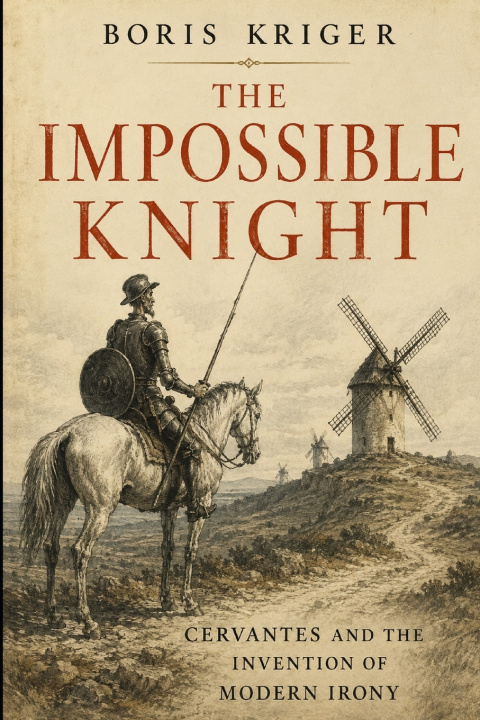
He was fifty-seven, missing the use of one hand, recently released from a Seville jail over an accounting discrepancy, excommunicated years earlier for confiscating a cathedral's wheat, and known in Madrid, when he was known at all, as a man who had once written an unsuccessful pastoral novel. He had spent five years as a slave in Algiers and attempted escape four times without ever explaining why he was not executed for it. Then Miguel de Cervantes wrote a joke about a country gentleman who read too many adventure stories and went out to fight for a woman who did not exist.
The joke escaped. It is still running.
This book argues that Cervantes built something nobody had built before: an irony with no floor. Socrates was ironic on his way somewhere. Satirists mock from behind a standard they are careful to keep visible. Cervantes hands the reader a mad old man and refuses, for nine hundred pages, to say whether we are watching a fool or the last honest person in Spain. He then compounds the offense by attributing the whole book to an Arab historian he tells us is a liar.
Here is the veteran who wrote it, alive and in debt. Here are the characters as the people they are: a squire negotiating his salary, a duchess entertaining herself with a lunatic, a housekeeper burning a library for the good of the household. And here is the machine itself, still turning, four centuries later, in an age that hands each of us a personal library of romances and dares us to charge at something.
The last chapter asks the only question the book has been building toward. In this story, which one are you?
Keywords: Cervantes, Don Quixote, irony, literary history, Spanish Golden Age, the novel, self-deception


Informácie o knihe
Angličtina

Darujte túto knihu ešte dnes
Je to jednoduché
1 Pridajte knihu do košíka a vyberte možnosť doručiť ako darček 2 Obratom Vám zašleme poukaz 3 Knihu zašleme na adresu obdarovanéhoAhoj! Som Libroamiko, tvoj knižný radca.
Ako ti môžem pomôcť?