
 Kontakt
 Ako nakupovať
Doručenie
Nákupný poradca
 Angličtina
 44 b
44 b
30 dní na vrátenie tovaru

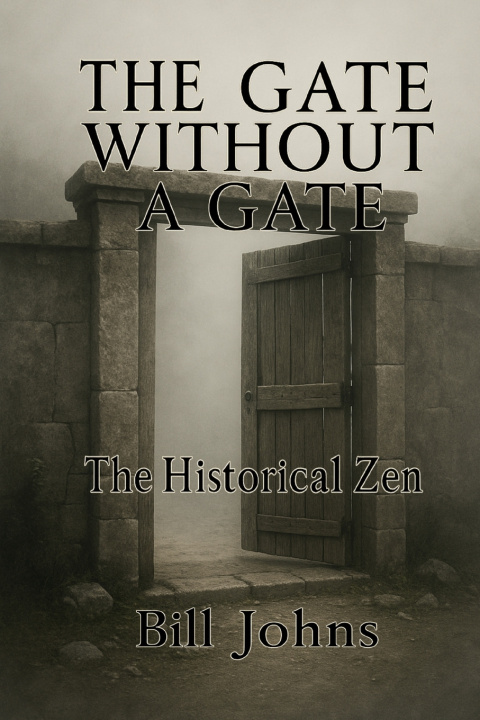
In an age obsessed with speed, noise, and control, The Gate Without a Gate offers something rare: stillness that speaks. Blending Zen philosophy, cultural history, and lyrical narrative, this book explores the long journey of mindfulness-from its beginnings in India's meditative traditions to its flowering in China and Japan, and into the modern world of philosophy and technology-and asks what it means to awaken in a civilization that has forgotten how to pause.
Drawing from the great lineages of Buddhist and Zen thought-from Nāgārjuna and Bodhidharma to Huineng, Dōgen, Hakuin, Shaku Sōen, and D. T. Suzuki-The Gate Without a Gate traces how enlightenment moved from the mountains of Asia to the modern West, and how silence became the language of a restless age. It is at once historical and intimate: a meditation on impermanence as continuity and attention as the last form of moral life in a distracted century.
Each chapter unfolds like a koan, turning on moments of paradox-fog dissolving into sunlight, a bell fading into air, a teacher's gesture preserved not in scripture but in memory. The prose itself mirrors the discipline it describes: patient, spacious, and alert to detail. What begins as cultural history becomes a meditation on perception itself, on how the act of seeing can become a form of reverence.
This is not another guide to mindfulness or a primer on Zen technique. It is a narrative meditation-a philosophical journey through time, language, and presence. The book travels from Indian ascetics to Chinese masters, from Japanese monasteries to twentieth-century Europe, where figures like Heidegger and the Kyoto School philosophers encountered Zen as both mirror and challenge. It follows D. T. Suzuki's translation of silence into thought, Thich Nhat Hanh's transformation of compassion into daily practice, and the diffusion of Buddhist insight into psychology, aesthetics, and modern consciousness.
Yet beneath the sweep of history runs a quieter question: can awareness survive in a culture built to divide it? The same teachings that once guided monks through emptiness now guide readers, artists, and thinkers through the noise of digital life. In these transformations-sometimes distorted, sometimes luminous-The Gate Without a Gate finds proof that wisdom endures by changing shape.
Written in prose as clear as mountain air, it reveals the rhythm between stillness and motion, being and non-being, the self and the world. It speaks to readers drawn to philosophy, mindfulness, and the contemplative arts, as well as to those who sense that meaning begins not in answers but in attention.
At its heart lies a simple vision: the gate never closed. Every moment of perception, every act of care, every breath taken consciously reopens it. The Gate Without a Gate invites the reader to cross not into doctrine but into presence-to rediscover what endures beneath distraction, to inhabit a silence that listens back.
Step through the gate. The sky is already open.


Informácie o knihe
Angličtina

Darujte túto knihu ešte dnes
Je to jednoduché
1 Pridajte knihu do košíka a vyberte možnosť doručiť ako darček 2 Obratom Vám zašleme poukaz 3 Knihu zašleme na adresu obdarovanéhoAhoj! Som Libroamiko, tvoj knižný radca.
Ako ti môžem pomôcť?