
 Kontakt
 Ako nakupovať
Doručenie
Nákupný poradca
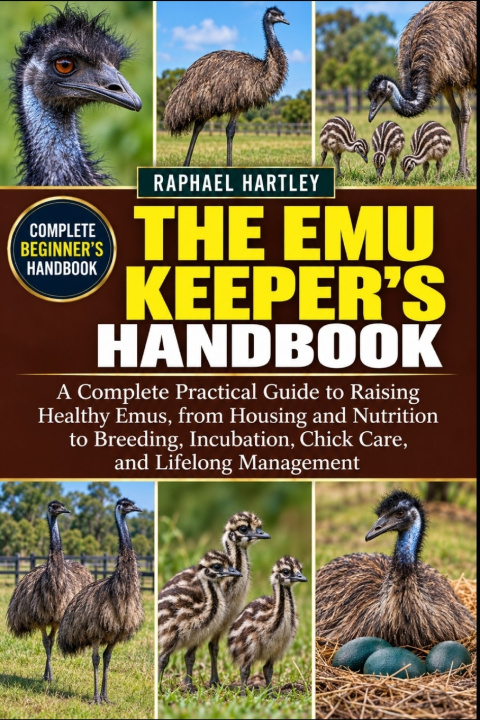
THE EMU KEEPER'S HANDBOOK
A Complete Practical Guide to Raising Healthy Emus, from Housing and Nutrition to Breeding, Incubation, Chick Care, and Lifelong Management
 Angličtina
 41 b
41 b
 Pripravujeme
 Nové
Nové
Až 30 dní na vrátenie tovaru

Discover how to raise healthy, well-managed emus with confidence using practical guidance covering housing, nutrition, behavior, health, breeding, incubation, chick care, safety, and lifelong management.
THE EMU KEEPER'S HANDBOOK is a complete practical resource for beginners, farmers, homesteaders, breeders, smallholders, and experienced ratite keepers. Raphael Hartley provides clear information designed to help readers understand emu biology, establish secure facilities, develop appropriate feeding programs, manage breeding responsibly, raise healthy chicks, and prepare for the long-term commitment of keeping these remarkable birds.
Emus are large, powerful, intelligent, and highly active flightless birds. Their size, speed, curiosity, social behavior, and strong legs mean that successful management requires considerably more preparation than ordinary poultry keeping. Secure fencing, adequate space, appropriate nutrition, safe handling systems, and experienced veterinary support are essential.
Inside this handbook, you'll discover:
• Emu natural history, anatomy, physical characteristics, behavior, and life cycle
• How to determine whether emus are suitable for your property, resources, experience, and goals
• Choosing healthy birds from responsible breeders and evaluating them before acquisition
• Planning secure fencing, gates, shelters, paddocks, handling areas, and essential equipment
• Providing adequate space for movement, exercise, exploration, and natural behavior
• Understanding emu nutritional requirements at different stages of life
• Feeding principles for chicks, juveniles, breeding adults, and mature birds
• Providing clean water and maintaining hygienic feeding and drinking areas
• Monitoring weight, growth, and body condition while preventing nutritional imbalance
• Understanding vocalizations, social relationships, curiosity, courtship, and defensive behavior
• Safe interaction, movement, restraint, and techniques for reducing unnecessary stress
• Environmental enrichment that encourages exploration and natural activity
• Routine monitoring of feathers, skin, eyes, legs, feet, appetite, droppings, and mobility
• Preventive veterinary care, parasite management, quarantine, sanitation, and biosecurity
• Recognizing early signs of injury, digestive problems, abnormal gait, respiratory concerns, or behavioral changes
• Understanding breeding season, pair formation, courtship, mating, and reproductive management
• Egg production, collection, storage considerations, and natural versus artificial incubation
• Monitoring incubation conditions and preparing for successful hatching
• Essential chick care involving warmth, nutrition, hydration, flooring, hygiene, and growth monitoring
• Managing growing juveniles and transitioning them into larger environments
• Record keeping for identification, growth, breeding, eggs, incubation, health, treatments, and transfers
• Emergency preparation for escapes, severe weather, injuries, equipment problems, and temporary caregivers
• Adapting management for aging or physically compromised emus
• Responsible sale, transfer, rehoming, and lifelong planning
THE EMU KEEPER'S HANDBOOK emphasizes prevention and preparation. Strong fencing, suitable nutrition, appropriate stocking, careful observation, biosecurity, and access to knowledgeable veterinary professionals can prevent many avoidable welfare and management problems.
Breeding is also presented as a responsibility. Before incubating eggs, keepers should have appropriate facilities, resources, time, and realistic plans for every chick produced.
Whether you are preparing for your first emus, improving an existing setup, entering your first breeding season, incubating eggs, or raising chicks, this handbook provides a dependable foundation.


Informácie o knihe
Angličtina
Kategórie

Darujte túto knihu ešte dnes
Je to jednoduché
1 Pridajte knihu do košíka a vyberte možnosť doručiť ako darček 2 Obratom Vám zašleme poukaz 3 Knihu zašleme na adresu obdarovanéhoAhoj! Som Libroamiko, tvoj knižný radca.
Ako ti môžem pomôcť?