
 Kontakt
 Ako nakupovať
Doručenie
Nákupný poradca
 Angličtina
 28 b
28 b
 Nové
Nové
Až 30 dní na vrátenie tovaru

The real danger is the answer that looks finished, sounds competent, survives a quick review, and fails only after money moves, customers click, or a production system depends on it.
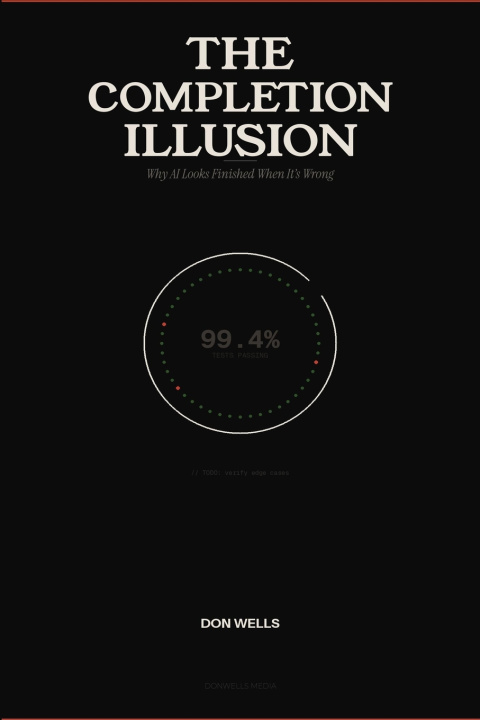
Large language models are unusually good at producing the signals people mistake for finished work. They give you structure, fluency, confidence, and convention on demand. In software, those signals are often enough to get code approved, tests trusted, and plans greenlit. Looking finished is not the same as being done.
Don Wells calls this the completion illusion, and this book traces it from mechanism to consequence to response.
When organizations adopt AI tools and restructure their processes around the assumption that AI output is reliable, they dismantle the human verification infrastructure that previously caught defects. Senior engineers get reassigned. Code review becomes a formality. Institutional knowledge about edge cases, system quirks, and non-obvious requirements disappears. The organization becomes simultaneously more productive and more fragile-shipping faster while losing the ability to know whether any of it is correct.
The problem is that usefulness is being mistaken for reliability at exactly the moment teams are building process around that mistake.
Twenty chapters. Six failure modes. Real incidents from finance, law, healthcare, and infrastructure. And a framework for engineering teams that refuse to let the surface signals do their thinking for them.
Not anti-AI. Anti-confusion.


Informácie o knihe
Angličtina

Darujte túto knihu ešte dnes
Je to jednoduché
1 Pridajte knihu do košíka a vyberte možnosť doručiť ako darček 2 Obratom Vám zašleme poukaz 3 Knihu zašleme na adresu obdarovanéhoAhoj! Som Libroamiko, tvoj knižný radca.
Ako ti môžem pomôcť?