Doprava zdarma pre objednávky nad 59,99 € s Packetou a SPS Boxmi.

Staňte sa súčasťou komunity milovníkov kníh z celého sveta a získajte hromadu výhod.
Založiť účet zdarma
Doprava zadarmo s Packetou nad 59.99 €
Kuriér DPD 2.99 €
Kuriér GLS 3.99 €
Zberné miesto GLS 2.49 €
SPS 3.99 €
SPS Parcel Shop 2.99 €
Packeta kurýr 3.99 €
Slovenská pošta 3.99 €
Zberné miesto DPD 2.99 €
Packeta 2.99 €
 Kontakt
 Ako nakupovať
Pomoc
Doručenie
Kuriér DPD 2.99 €
Kuriér GLS 3.99 €
Zberné miesto GLS 2.49 €
SPS 3.99 €
SPS Parcel Shop 2.99 €
Packeta kurýr 3.99 €
Slovenská pošta 3.99 €
Zberné miesto DPD 2.99 €
Packeta 2.99 €
Doprava zadarmo s Packetou nad 59.99 €
Nákupný poradca
Sme tu pre Vás!
02/210 210 99
Môj účet
▸
Prázdny :-(
0
Doprava zdarma pre objednávky nad 59,99 € s Packetou a SPS Boxmi.
The Christian and Artificial Intelligence
Faith, Wisdom, Discernment, and Following Christ in the Age of Artificial Intelligence
Jazyk
 Angličtina
Angličtina
Kniha
Brožovaná
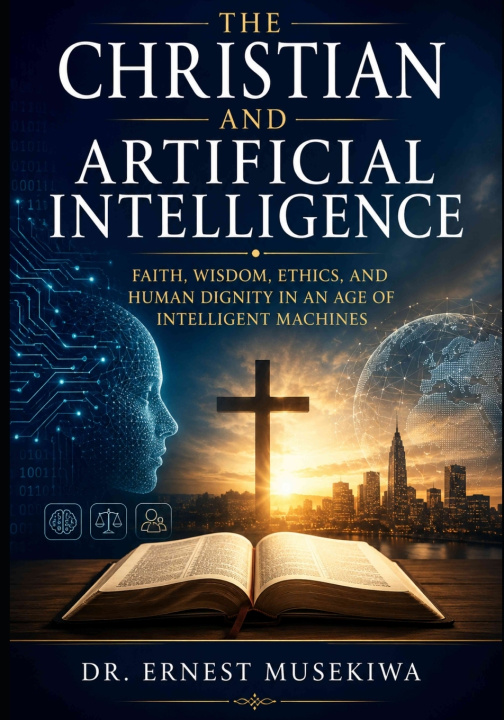
What happens to Christian faith when artificial intelligence begins reshaping the world?Artificial i...
Celý popis
Libristo kód: 53615206
?
 48 b
48 b
48 b
20.10
€
Skladom u dodávateľa
Odosielame za 14-21 dní
Až 30 dní na vrátenie tovaru

What happens to Christian faith when artificial intelligence begins reshaping the world?
Artificial intelligence is no longer a distant technological possibility. It is already transforming how people work, communicate, study, create, make decisions, access information, and understand the world around them. As AI becomes increasingly powerful, Christians face questions that cannot be answered by technology alone.
- What does it mean to be human in an age of intelligent machines?
- Can artificial intelligence become a threat to Christian faith and biblical truth?
- How should Christians understand AI-generated information, images, voices, and theology?
- Can AI be used responsibly in preaching, pastoral ministry, Christian education, evangelism, and missions?
- What happens when knowledge increases faster than wisdom?
The book explores artificial intelligence, human dignity, the image of God, biblical wisdom, misinformation, digital deception, technology and work, Christian ethics, Scripture and interpretation, Christian ministry, discipleship, evangelism, missions, prophecy, and the future of the Church.
Particular attention is given to Daniel's statement that in the time of the end "knowledge shall increase" (Dan. 12:4). The book does not claim that Daniel specifically predicted artificial intelligence. Instead, it carefully considers whether the extraordinary explosion of knowledge and technological capability in our generation provides a meaningful context in which Christians can reflect upon Daniel's words.
Rather than encouraging either technological fear or technological worship, this book calls Christians to discernment.
AI may become increasingly intelligent, but intelligence is not wisdom.
Technology may become increasingly powerful, but power is not righteousness.
Information may become increasingly abundant, but information is not truth.
Machines may become increasingly conversational, but artificial conversation is not Christian community.
The Church therefore faces a choice: not whether to engage artificial intelligence, but how to engage it faithfully.
This book is for Christians who want to understand the technological future without abandoning biblical truth, for pastors and ministry leaders seeking to navigate AI responsibly, for educators and students confronting AI in learning, and for ordinary believers asking what artificial intelligence means for their faith, work, families, churches, and future.
The future may be artificial. Our faith must remain genuine.
Herečka
&
Polyglotka
EWA KASP
pre
Prehrať video


Libristo má najväčší výber cudzojazyčnej literatúry. Preto si knihy kupujem tu.
Informácie o knihe
Celý názov
The Christian and Artificial Intelligence
Autor
Ernest Musekiwa
Jazyk
Angličtina
Angličtina
Väzba
Kniha - Brožovaná
Dátum vydania
2025
Počet strán
300
EAN
9798194279807
Libristo kód
53615206
Nakladateľstvo
Independently published
Váha
525
Rozmery
178 x 254 x 16
