
 Kontakt
 Ako nakupovať
Doručenie
Nákupný poradca
 Angličtina
 40 b
40 b
 Nové
Nové
30 dní na vrátenie tovaru

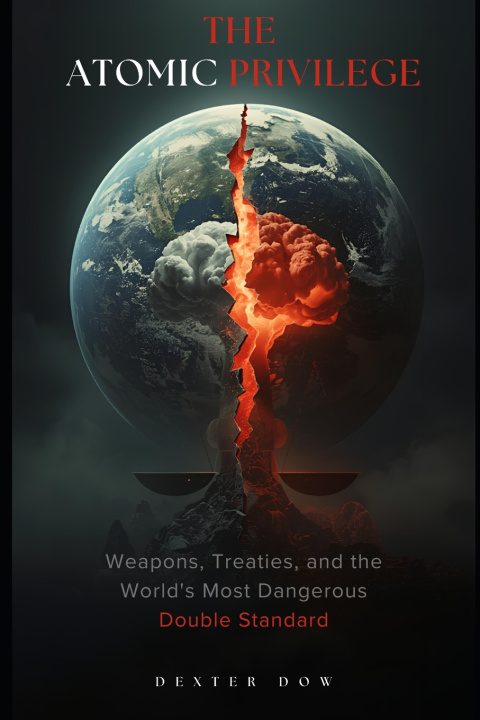
The Atomic Privilege is a rigorous, accessible examination of the modern nuclear order-and the dangerous double standard at its core. Dexter Dow argues that the global nonproliferation regime was not built simply to reduce risk. It was built to divide the world into permanent nuclear "haves" and "have-nots," granting legitimacy, tolerance, and strategic protection to some states while subjecting others to sanctions, sabotage, invasion, or isolation for pursuing similar capabilities.
Drawing on treaty law, IAEA reports, declassified archives, official investigations, and decades of geopolitical case studies, this book traces how nuclear inequality became embedded in international law and then converted into force. From the NPT and the broken promise of disarmament to Israel's opacity, Iraq's destruction, Libya's disarmament, Iran's isolation, North Korea's deterrent logic, Ukraine's abandoned assurances, and the collapse of arms control, The Atomic Privilege shows how the same weapon is treated as stabilizing in the hands of a few and intolerable in the hands of everyone else.
The result is a book about far more than nuclear policy. It is about power, legitimacy, deterrence, international law, military strategy, and the geopolitical consequences of selective enforcement. It also confronts the accelerating dangers of the present moment: superpower modernization, hypersonic weapons, cyber threats, artificial intelligence, and a nuclear architecture that is eroding faster than it can be repaired.
For readers of international relations, military history, arms control, national security, and foreign policy, The Atomic Privilege offers a clear-eyed account of how the nuclear order actually works-and why a system built on permanent exception cannot deliver lasting peace.


Informácie o knihe
Angličtina

Darujte túto knihu ešte dnes
Je to jednoduché
1 Pridajte knihu do košíka a vyberte možnosť doručiť ako darček 2 Obratom Vám zašleme poukaz 3 Knihu zašleme na adresu obdarovanéhoAhoj! Som Libroamiko, tvoj knižný radca.
Ako ti môžem pomôcť?