
 Kontakt
 Ako nakupovať
Doručenie
Nákupný poradca
 Angličtina
 36 b
36 b
 Pripravujeme
 Nové
Nové
30 dní na vrátenie tovaru
Zákazníci tiež kúpili




In an age of accelerating artificial intelligence, the conversation about risk has quietly hardened into prophecy.
What began as careful warnings about advanced AI has become, for many, a confident prediction of inevitable catastrophe: power-seeking machines, uncontrollable optimization, recursive self-improvement, and existential doom. But what if the deepest danger is not simply misalignment, but certainty itself?
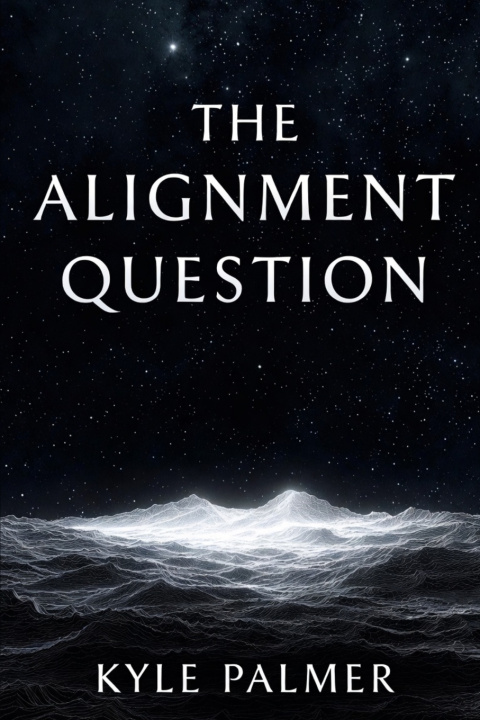
In The Alignment Question, Kyle Palmer offers a bold philosophical challenge to the dominant narratives surrounding AI alignment. Neither alarmist nor complacent, the book asks a deeper question: not whether machines can be forced to obey us, but what kinds of intelligence-human or artificial-can actually endure in a universe governed by entropy, competition, uncertainty, constraint, and time.
Drawing from AI safety, information theory, cybernetics, evolutionary biology, epistemology, and philosophy of science, Palmer reframes intelligence not as pure cognition, but as a fragile, adaptive process struggling to remain coherent in a world that resists prediction. He examines the limits of control, the seduction of doomsday certainty, the physics of persistence, and the possibility that humanity may not be obsolete scaffolding, but an irreplaceable source of variance, embodied memory, moral friction, and resilience.
This is not a book about denying AI risk. It is a book about thinking more deeply than fear allows.
For readers of Nick Bostrom, David Deutsch, Karl Popper, Claude Shannon, Nassim Taleb, and anyone wrestling with the future of mind, The Alignment Question offers a new framework for the age of artificial intelligence:
The future will not belong to the most powerful intelligence in abstraction, but to the intelligence that can survive reality.


Informácie o knihe
Angličtina
Kategórie