
 Kontakt
 Ako nakupovať
Doručenie
Nákupný poradca
 Angličtina
 92 b
92 b
30 dní na vrátenie tovaru

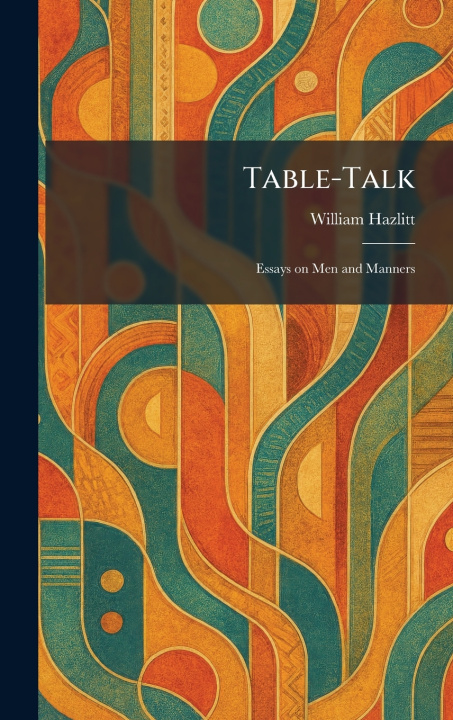
"Table-Talk. Essays on Men and Manners" is a seminal collection by the renowned English essayist and critic William Hazlitt. Representing some of the finest examples of the Romantic-era essay, this work delves into a broad spectrum of human experiences, social customs, and intellectual pursuits. Hazlitt's writing is characterized by its "familiar style," a conversational yet intellectually rigorous approach that avoids the stiffness of formal academic prose while retaining deep philosophical weight.
The collection features a series of insightful reflections on topics ranging from the nature of genius and the complexities of human character to the nuances of art, literature, and politics. In essays such as "On the Past and Future" and "The Indian Jugglers," Hazlitt displays his characteristic blend of vigor, wit, and candid observation. He examines the manners of his age with a critical eye, offering timeless wisdom on how individuals navigate the world around them. This work stands as a testament to Hazlitt's mastery of the essay form, bridging the gap between personal meditation and public discourse. Readers will find in "Table-Talk. Essays on Men and Manners" a vibrant portrait of early 19th-century thought and an enduring exploration of the human condition that remains as provocative and engaging today as when it was first penned.
This work has been selected by scholars as being culturally important, and is part of the knowledge base of civilization as we know it. This work was reproduced from the original artifact, and remains as true to the original work as possible. Therefore, you may see the original copyright references, library stamps (as most of these works have been housed in our most important libraries around the world), and other notations in the work.
This work is in the public domain in the United States of America, and possibly other nations. Within the United States, you may freely copy and distribute this work, as no entity (individual or corporate) has a copyright on the body of the work.
As a reproduction of a historical artifact, this work may contain missing or blurred pages, poor pictures, errant marks, etc. Scholars believe, and we concur, that this work is important enough to be preserved, reproduced, and made generally available to the public. We appreciate your support of the preservation process, and thank you for being an important part of keeping this knowledge alive and relevant.


Informácie o knihe
Angličtina
