
 Kontakt
 Ako nakupovať
Doručenie
Nákupný poradca
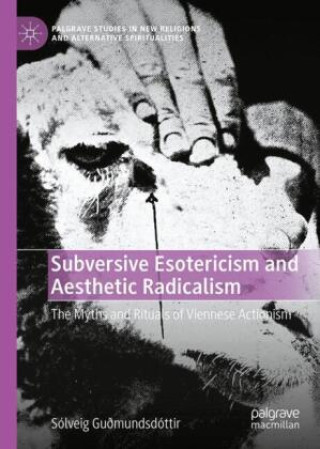
Subversive Esotericism and Aesthetic Radicalism
The Myths and Rituals of Viennese Actionism
 Angličtina
 Lacno
Lacno
&
výhodne ▸
Až 30 dní na vrátenie tovaru
Zákazníci tiež kúpili








 /
/
 Pevná
Pevná
 69.80
€
69.80
€









 /
Pevná
287.47
€
/
Pevná
287.47
€











 /
Brožovaná
74.62
€
/
Brožovaná
74.62
€

This book investigates the role of esotericism in the art of the Vienna Actionists. Addressing this crucial but neglected aspect of Actionism, the book traces, historicizes, and examines its esoteric discourses. The Actionists were a group of Austrian neo-avant-garde artists, infamous for their transgressive performance art. With the method of historical discourse analysis, Sólveig Guðmundsdóttir analyzes selected works: the collective manifesto Die Blutorgel (1962), Rudolf Schwarzkogler's text Das Ästhetische Panorama (1967/68) and the performances Abreaktionsspiel (1970) by Hermann Nitsch, and Zerreißprobe (1970) by Günter Brus. She maps out the various discursive entanglements as they appear in the works, i.e., between esotericism and discourses such as psychoanalysis, fascism, gender, sexuality and religious discourses. This allows the author to illustrate and establish the importance of esoteric traditions for the Actionists' art, and the different ways they used them in theiraesthetic activism. The artworks are analyzed considering the cultural nexus of post-war Austria. The analysis reflects on these relations between radical politics and esotericism, and how they appear in Actionism. I argue, that examining the historical placement of esotericism is vital for the context of the works, and that it also helps to understand the contradictory image of the Actionists as both anti-authoritarian artists and the reception of them as reactionary artists.


Informácie o knihe
Angličtina
Kategórie

Darujte túto knihu ešte dnes
Je to jednoduché
1 Pridajte knihu do košíka a vyberte možnosť doručiť ako darček 2 Obratom Vám zašleme poukaz 3 Knihu zašleme na adresu obdarovanéhoMohlo by vás tiež zaujímať






 /
Pevná
204.02
€
/
Pevná
204.02
€






 /
Brožovaná
25.37
€
/
Brožovaná
25.37
€
 /
Brožovaná
27.27
€
/
Brožovaná
27.27
€

 /
Pevná
27.27
€
/
Pevná
27.27
€





Ahoj! Som Libroamiko, tvoj knižný radca.
Ako ti môžem pomôcť?