
 Kontakt
 Ako nakupovať
Doručenie
Nákupný poradca
 Angličtina
 40 b
40 b
30 dní na vrátenie tovaru

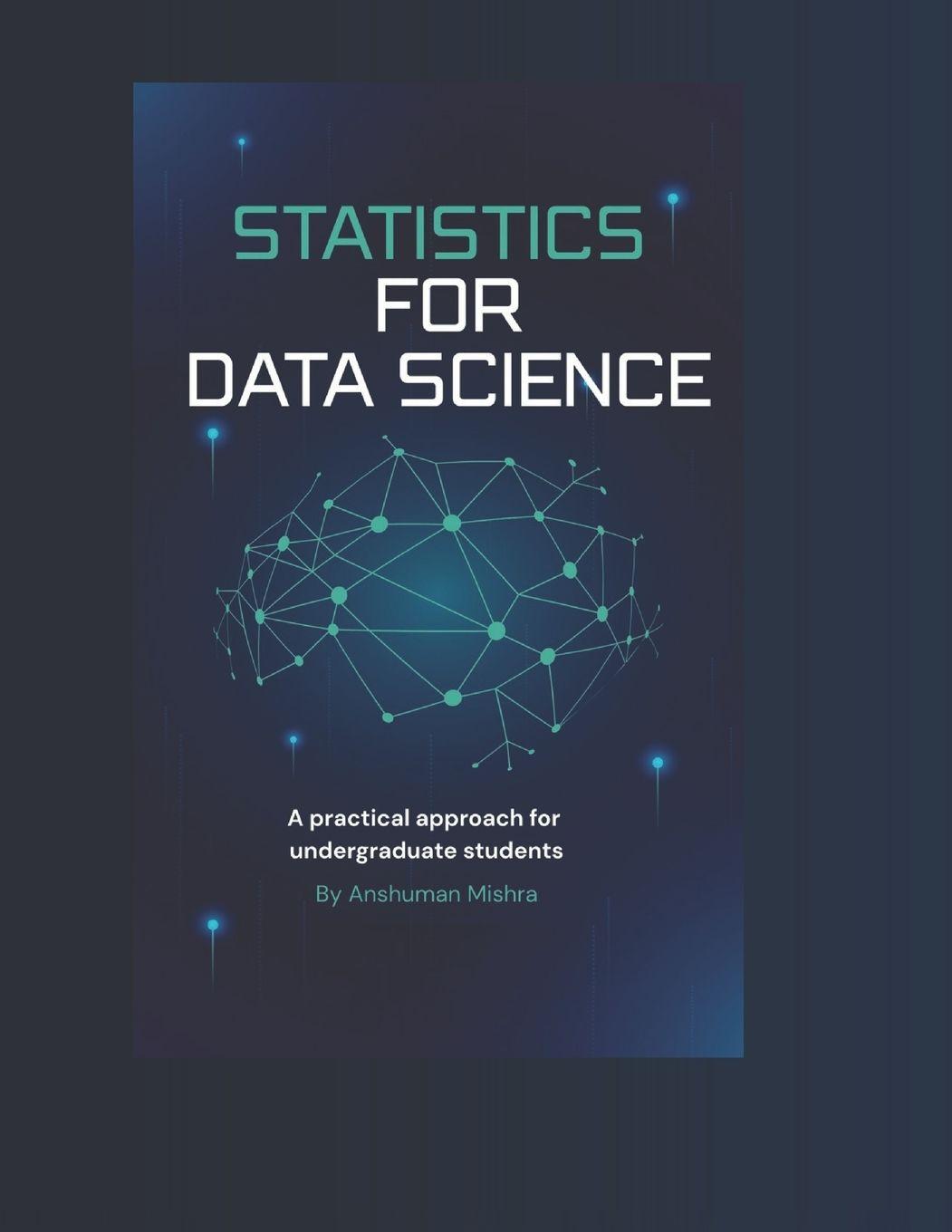
Unlike conventional statistics books, this book approaches statistical learning with a pragmatic, industry-relevant lens. Data is no longer confined to labs or theoretical research-it's now at the heart of product design, business decisions, artificial intelligence, and public policy. The author's goal is to empower students to not only understand statistics but also to communicate results, make data-driven decisions, and build predictive models confidently.
Each topic, from central tendency to regression analysis, is backed with realistic datasets, contextual narratives, and practical scenarios. For example, while discussing logistic regression, students are guided through applications like predicting customer churn or disease detection using real-world healthcare datasets. This relevance helps learners grasp not only the what and how, but also the why behind every statistical method.
Why Statistics Matters in Data Science
Statistics is the backbone of data science. Without a good understanding of statistical methods, it's impossible to validate assumptions, interpret models, assess data quality, or make reliable predictions. In this book, the importance of statistical literacy is emphasized right from the start. The reader is encouraged to think critically, explore data patterns, and assess uncertainty-key attributes for any aspiring data professional.
The book also walks students through the evolution of data science, highlighting how statistical concepts have powered machine learning, AI, and deep learning models. Even black-box algorithms require a strong grasp of statistical tools for proper tuning, validation, and error analysis.
Multidisciplinary Relevance
The book is intentionally designed to be multidisciplinary, making it a suitable companion for learners from commerce, management, life sciences, social sciences, and computer science. Whether the student is analyzing survey responses, clinical trials, market data, or customer behavior, the statistical techniques taught in this book remain universally applicable.
To facilitate interdisciplinary learning, each chapter includes case studies from multiple domains. For example:
- Business Analytics: Sales forecasting, A/B testing, customer segmentation
- Healthcare: Survival analysis, clinical trial interpretation
- Environment and Agriculture: Climate data modeling, yield prediction
- Social Science: Survey analysis, behavioral trend studies
Curriculum-Aligned and Instructor-Friendly
The book has been written keeping in mind the curriculum requirements of major undergraduate programs across universities. It's particularly aligned with CBCS (Choice Based Credit System) and AICTE-approved syllabi. Each unit is mapped to specific learning outcomes, making it easy for instructors to schedule classes, assign homework, and assess learning.
- Lecture-Wise Breakdown: Each chapter can be broken down into 4-6 lectures
- Assignments & Lab Work: Ready-to-use coding exercises for Python and R
- MCQs and Quizzes: Objective-type questions for exam preparation
- Mini Projects: End-of-semester projects with evaluation rubrics


Informácie o knihe
Angličtina
Kategórie

Darujte túto knihu ešte dnes
Je to jednoduché
1 Pridajte knihu do košíka a vyberte možnosť doručiť ako darček 2 Obratom Vám zašleme poukaz 3 Knihu zašleme na adresu obdarovanéhoAhoj! Som Libroamiko, tvoj knižný radca.
Ako ti môžem pomôcť?