
 Kontakt
 Ako nakupovať
Doručenie
Nákupný poradca
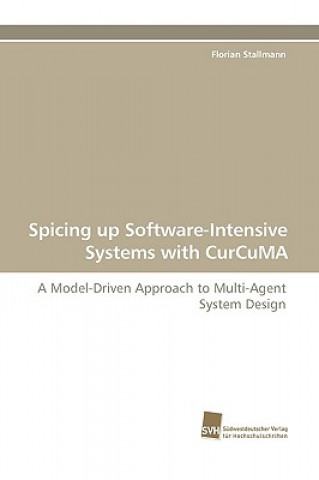
Spicing Up Software-Intensive Systems with Curcuma
 Nemčina
 194 b
194 b
Až 30 dní na vrátenie tovaru
Zákazníci tiež kúpili

 /
/
 Brožovaná
 8.99
€
8.99
€
 /
Brožovaná
8.99
€
/
Brožovaná
8.99
€



The multi-agent paradigm promises an intuitive understanding of dynamic software-intensive systems capable of adapting their own behavior, while Model-Driven Engineering improves quality and efficiency. In this thesis, we fuse these concepts into a model-driven approach to multi-agent system design by combining CurCuMA, an innovative approach for designing complex coordination architectures, with a solid theoretical and technical foundation that enables formal verification and experimental validation. CurCuMA is based on dynamic agent organizations solving specific problems by adhering to a set of shared conventions, and the prominent use of the agents' environment as the frame of reference that such conventions require. For their specification, we extend the UML with a family of visual constraint languages: Story Decision Diagrams provide a first-order logic for object-oriented systems, whereas Timed Story Scenario Diagrams describe their structural evolution. We provide a formal semantics based on graph grammars, which enables the application of formal verification techniques and an iterative development process relying on code generation, simulation, and monitoring.


Informácie o knihe
Nemčina
Kategórie

Darujte túto knihu ešte dnes
Je to jednoduché
1 Pridajte knihu do košíka a vyberte možnosť doručiť ako darček 2 Obratom Vám zašleme poukaz 3 Knihu zašleme na adresu obdarovanéhoMohlo by vás tiež zaujímať
Ahoj! Som Libroamiko, tvoj knižný radca.
Ako ti môžem pomôcť?