
 Kontakt
 Ako nakupovať
Doručenie
Nákupný poradca
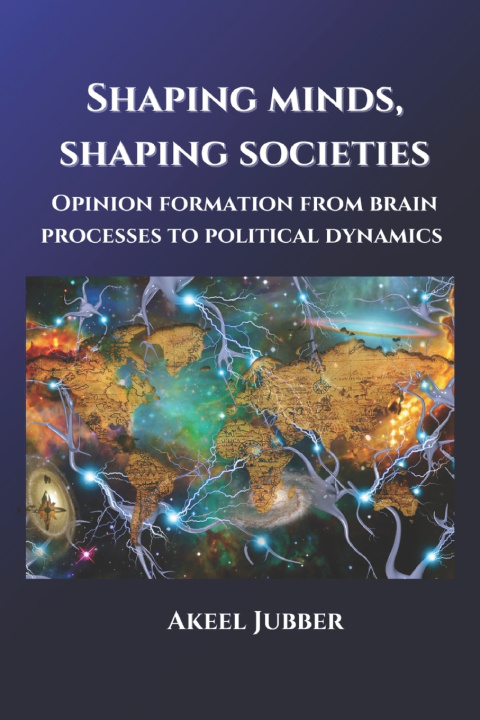
Shaping Minds, Shaping Societies
Opinion Formation from Brain Processes to Political Dynamics
 Angličtina
 36 b
36 b
Až 30 dní na vrátenie tovaru

Forming an opinion is not merely a matter of expressing a viewpoint, but the outcome of a complex cognitive process shaped by the interaction of personality traits, belief systems, prior experiences, accumulated knowledge, and social background. Each of these factors leaves a distinctive imprint on how individuals interpret the same piece of information, which is why the same message can evoke sharply different responses across individuals and groups. The significance of this multifaceted process lies in the fact that opinion formation extends far beyond the individual. As personal views crystallise into collective narratives, they influence public discourse, political culture, and ultimately the stability of societies.
At its foundation, opinion formation rests on dynamic neuro-cognitive mechanisms. Individuals gather and process information from direct experience, social interaction, and external sources such as books, media, and online platforms. This information is then appraised for credibility and meaning, filtered through memory and prior knowledge, and integrated into broader belief systems.
The neuro-cognitive dimension of this process engages brain regions such as the prefrontal cortex, which governs reasoning and executive control, the amygdala, which assigns emotional significance to information, and the hippocampus, which embeds new data within long-term memory structures. However, this system, powerful as it is, remains vulnerable to disruption. Cognitive biases such as confirmation bias, stereotyping, and conspiratorial thinking distort perceptions, leading people to construct skewed opinions that may resist change even in the face of overwhelming evidence.


Informácie o knihe
Angličtina

Darujte túto knihu ešte dnes
Je to jednoduché
1 Pridajte knihu do košíka a vyberte možnosť doručiť ako darček 2 Obratom Vám zašleme poukaz 3 Knihu zašleme na adresu obdarovanéhoAhoj! Som Libroamiko, tvoj knižný radca.
Ako ti môžem pomôcť?