
 Kontakt
 Ako nakupovať
Doručenie
Nákupný poradca
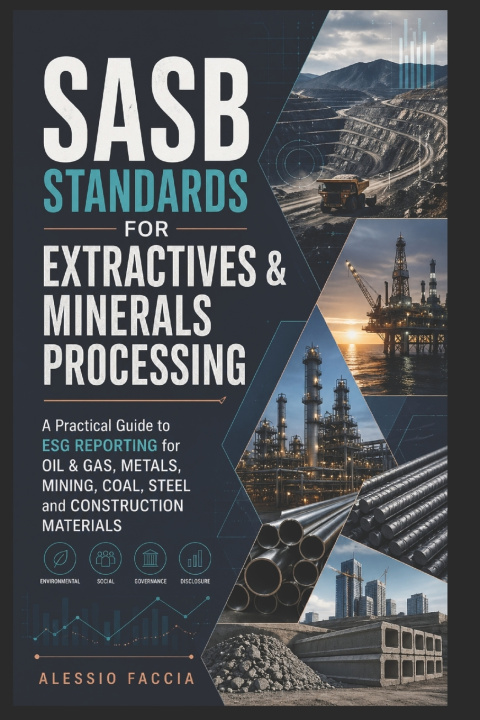
SASB Standards for Extractives & Minerals Processing
A Practical Guide to ESG Reporting for Oil & Gas, Metals, Mining, Coal, Steel and Construction Materials
 Angličtina
 96 b
96 b
 Nové
Nové
Až 30 dní na vrátenie tovaru

SASB Standards for Extractives & Minerals Processing is a practical professional guide for ESG reporting across oil and gas, metals, mining, coal, steel and construction materials.
This book helps preparers, auditors, consultants, finance teams, ESG officers, trainers, board members and assurance providers apply SASB Standards with operational discipline, audit-ready evidence and investor-focused reporting.
The manual covers the eight SASB industry categories within Extractives & Minerals Processing:
Coal Operations
Construction Materials
Iron & Steel Producers
Metals & Mining
Oil & Gas Exploration & Production
Oil & Gas Midstream
Oil & Gas Refining & Marketing
Oil & Gas Services
Each chapter explains the business model, operating risks, disclosure topics, metrics, evidence sources, control systems and financial relevance of SASB reporting. The book does not treat ESG reporting as a generic checklist. It links disclosure to assets, production routes, emissions, water use, waste, tailings, safety, labour relations, community relations, Indigenous rights, business ethics, reserves, capital expenditure and critical incident risk.
Readers learn how to interpret SASB metrics in real industrial settings. A coal mine, steel mill, refinery, quarry, pipeline operator and oilfield services provider do not report the same risks. Each business has different assets, data sources, controls and exposure. This guide explains those differences in plain professional language.
The book gives special attention to greenhouse gas emissions, methane, flaring, refinery energy intensity, clinker emissions, steel production routes, tailings storage facilities, hazardous waste, water-stressed regions, workforce safety, contractor risk, process safety, pricing integrity and legal exposure.
It also explains how activity metrics support interpretation. Production volumes, refining throughput, transport activity, rig sites, active well sites, steel output and workforce hours help distinguish real performance gains from lower activity, divestments or changes in calculation method.
This guide is suitable for professionals working in reporting, audit, assurance, finance, risk management, ESG, investor relations, internal control, operations and governance.
Use this book to build stronger SASB disclosures, test ESG data quality, prepare for assurance, train reporting teams and connect industry-specific metrics with financial risk.


Informácie o knihe
Angličtina

Darujte túto knihu ešte dnes
Je to jednoduché
1 Pridajte knihu do košíka a vyberte možnosť doručiť ako darček 2 Obratom Vám zašleme poukaz 3 Knihu zašleme na adresu obdarovanéhoAhoj! Som Libroamiko, tvoj knižný radca.
Ako ti môžem pomôcť?