
 Kontakt
 Ako nakupovať
Doručenie
Nákupný poradca
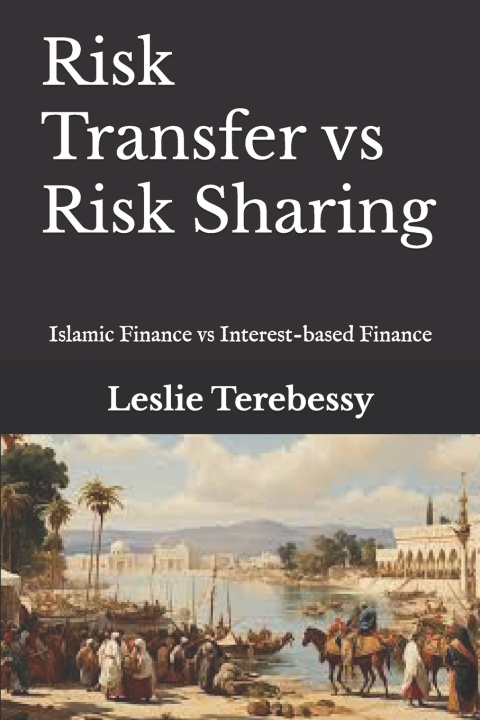
Risk Transfer vs Risk Sharing
What Makes Islamic Finance Better than Interest-based Finance
 Angličtina
 40 b
40 b
Až 30 dní na vrátenie tovaru

Risk is the possibility of an adverse or disastrous outcome of a given action. Risk arises out of the fact that our knowledge, in particular our knowledge of the future, is limited. While the past may be relatively well known, future is unknown. It is tempting to predict the future on the basis of the past, according to the dictum, "history repeats itself." However, no single model takes into account all variables that may influence the outcome of a given act. The existence of risk implies a limit on our ability the control our fate. Some contingencies may be unforeseen. While science attempts to control the environment, inclusive of future events, history has shown repeatedly that human control is always incomplete. Complete control rests only with God. Risks arise in all walks of life. A person driving through a red light takes a risk of getting involved in an accident. A smoker takes the risk of developing cancer. A gambler takes the risk of losing money. There is a risk of fire, or the risk of becoming a victim of crime. There is a risk of being kidnapped, being mistaken for someone else, or the risk of becoming an innocent victim. There is also the risk of physical or psychological injury, illness or an outbreak of epidemic, on a local or a global scale. Natural disasters, such as floods, earthquakes or tsunamis also present risks. There is also a risk of war, civil war, or even a world war. There is a risk of political instability (rioting or a coup d'état). There is a risk of property loss or damage, or a risk of disgrace (damage to one's reputation). Everything from wearing protective clothing, starting a retirement fund, to spending on defence is a different way of shielding oneself or one's community from risk and the fundamental insecurity that characterises all human existence. Risks can be divided into avoidable and unavoidable. Avoidable risks, such as the risk of loss arising from gambling (qimar), are self-imposed. In order to avoid such risks one merely needs to abstain from the activities that give rise to them. Other risks, such as the risk of losses in business, may be unavoidable. In principle, unavoidable risks are permitted, but avoidable are not. Hence, risk taking is permitted in business but not in gambling. The fact that risk in business is unavoidable makes it fundamentally different from risks such as arise in gambling. In gambling, one party can win only if another loses. Gambling is thus a "win-lose" or "zero sum game." By contrast, partners in business gain or suffer a loss together. In finance, risks arise in both investment as well as in lending. The main risk in investment is the risk of losses. The main risk in lending is the risk that borrowers may fail to repay their loans to creditors. This risk is known as credit risk, also known as the risk of default or more simply as counterparty risk. A common method of protecting against credit risk is simply to withhold lending from all borrowers unable to post acceptable collateral. At the company level another method is for lenders to purchase credit derivatives such as credit default swaps (CDS), effectively a form of insurance on debt. Another risk that arises in lending is interest risk. This is the risk that interest rates may change in an unfavourable direction. A common method of protection against interest risk is to enter into interest rate swap (IRS) contracts. Liquidity risk arises in both lending and investment. This risk arises from the fact that it may become difficult if not impossible to liquidate securities, whether stocks or bonds, at a time of crisis. Liquidity crises commonly take place when investors wish to liquidate their assets at the same time. Selling pressure drives prices down and makes it impossible to liquidate securities at any but rock bottom prices. This is essentially what transpired during the recent 2008 global financial crisis.


Informácie o knihe
Angličtina

Darujte túto knihu ešte dnes
Je to jednoduché
1 Pridajte knihu do košíka a vyberte možnosť doručiť ako darček 2 Obratom Vám zašleme poukaz 3 Knihu zašleme na adresu obdarovanéhoAhoj! Som Libroamiko, tvoj knižný radca.
Ako ti môžem pomôcť?