
 Kontakt
 Ako nakupovať
Doručenie
Nákupný poradca
 Angličtina
 61 b
61 b
Až 30 dní na vrátenie tovaru

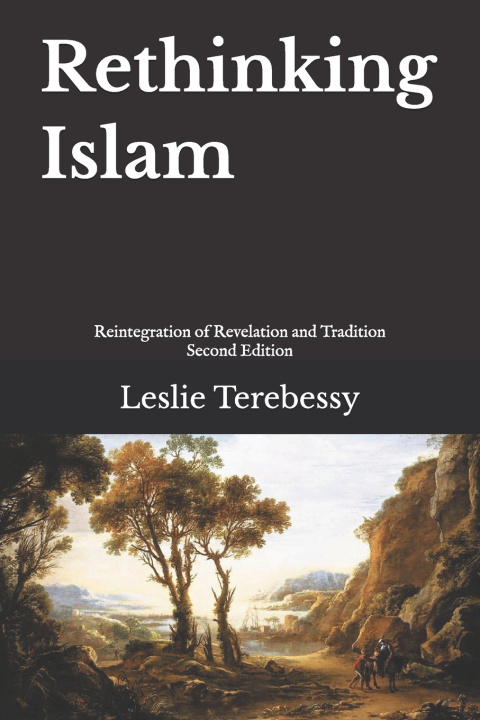
The umma is in trauma. Under political pressure, it drifted from revelation to tradition. Tradition transformed Islam, preached by Muhammad, into traditional Islam, based on books of traditions. The "abrogation" of the verses of reconciliation engendered Islamism. This requires attention. For Islamism brings hardship to the umma as well as to parties aggrieved by the aggression of Islamists. Because of its estrangement from revelation, Islamism fails everywhere. Thus, the knowledge of revelation requires rehabilitation. For it was corrupted by its politicization, undertaken to further the political aspirations of hawkish rulers. Enlarging the empire required a justification of wars of aggression, prohibited in revelation. Accordingly, hawkish ulama reinterpreted defensive as aggressive jihad. They treated it as a sixth pillar of Islam. Bellicose jurists divided the world into "us and them," the abode of Islam and the abode of war. "Islamic" rule would be expanded by wars of aggression or jihad al-talab. The reinterpretation of Islam as a teaching of war to provide a justification for empire-building by hawkish rulers required the weaponization of exegesis and jurisprudence. The weaponization of exegesis and jurisprudence required recourse to presuppositions and practices that would render lawful what Allah prohibited, wars of aggression. These presuppositions and practices encompass the treatment of tradition as revelation and recourse to the teaching of abrogation. The treatment of tradition as revelation treats tradition as a "partner" of revelation. The turn from revelation to tradition was a reorientation of epic proportions. It was a shift from a revelation-centric to a tradition-centric epistemological paradigm. Tradition eclipsed and superseded revelation. Traditions replaced the Book of Allah as guidance. The treatment of tradition as revelation produced a range of troubling effects. It expanded and tainted what is understood as "revelation." It tainted the knowledge of revelation by treating tradition as "equal to," a "part of" and a "judge of" revelation. This blurred the line between revelation and tradition. The treatment of tradition as revelation enabled tradition to eclipse revelation by traditions, superseding revelation as the furqan and a root of legislation. This corrupted penal law, prescribing death penalties for actions not treated as punishable by death in the Book of Allah. For Allah prohibited "judging" by anything He did not "send down" (Quran, 5: 44, 45 and 47). Those who take penal laws from traditions judge by what Allah did not send down (anzala). The treatment of tradition as revelation and recourse to the teaching of abrogation were an unqualified catastrophe. The treatment of tradition as revelation and recourse to the teaching of abrogation enabled the emergence of traditional and political Islam. The first was used to repress enemies within the realm while the latter justified aggression abroad. Traditionalism rests on the treatment of tradition as revelation, while Islamism rests on the presupposition that the verses of reconciliation are "abrogated" by the verse of the sword. The recourse to these presuppositions was expedited by the repression of reason and by casting doubts on the perfection of revelation. Traditionists insinuate that revelation, contrary to what it teaches, is partly "unclear," "incomplete" and "contradictory." Accordingly, revelation requires "explanation" and "completion." These would be furnished by tradition. Alleged "contradictions" would be reconciled by recourse to the teaching of abrogation. But this required rejecting all allegedly "abrogated" verses. It entailed kufr in all verses purportedly "abrogated" by verses revealed afterwards. Embracing the teaching of abrogation is tantamount to embracing kufr. Recourse to the teaching of abrogation was justified by a mis-rendering of the term naskh as "abrogate," while it signifies transcribe.


Informácie o knihe
Angličtina

Darujte túto knihu ešte dnes
Je to jednoduché
1 Pridajte knihu do košíka a vyberte možnosť doručiť ako darček 2 Obratom Vám zašleme poukaz 3 Knihu zašleme na adresu obdarovanéhoAhoj! Som Libroamiko, tvoj knižný radca.
Ako ti môžem pomôcť?