
 Kontakt
 Ako nakupovať
Doručenie
Nákupný poradca
 Angličtina
 66 b
66 b
 Pripravujeme
 Nové
Nové
Až 30 dní na vrátenie tovaru

What if one of the deepest influences on a child's mind begins before that child is old enough to question it?
A newborn does not arrive believing in Christianity, Islam, Hinduism, heaven, hell, karma, sin, caste, purity, or divine punishment. Yet within a few short years, children may speak with certainty about beliefs they never independently examined. Their religion was usually selected first by family, geography, and culture. Understanding came later.
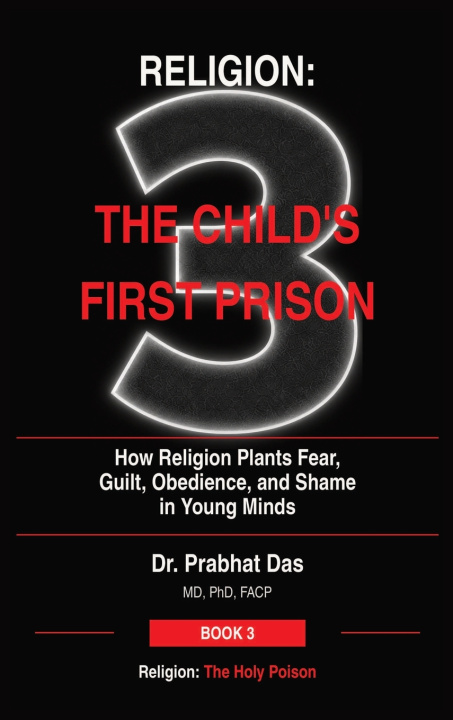
In Religion: The Child's First Prison, Book 3 of the ten-volume Religion: The Holy Poison series, physician and author Dr. Prabhat Das examines what may happen when religion enters a child's life before genuine choice is possible.
This is not a mild discussion of tradition. It is a serious examination of how religious conditioning can shape the developing mind through fear, guilt, obedience, shame, and division.
Dr. Das explores how children may be taught to fear hell and divine punishment, feel guilty for normal doubts and desires, obey adults who claim sacred authority, accept unequal treatment of girls, distrust people from other religions or castes, hide their identity to preserve family love, or accept prayer in place of medical care. He also examines institutional abuse, forced religious assimilation, witchcraft accusations, religious schooling, and the suppression of the child's natural instinct to ask one of the most important questions in human life:
How do you know this is true?
Drawing on medicine, psychology, history, documented cases, official investigations, and decades of clinical experience, Dr. Das asks readers to confront an uncomfortable possibility: religion may do some of its deepest work not by convincing informed adults, but by reaching children before they can compare beliefs, examine evidence, or safely say no.
The book does not argue that children should know nothing about religion. It argues the opposite. Children should learn about many religions, their histories, their claims, their achievements, and their harms. But learning about religion is very different from being placed inside one as unquestionable truth.
At its heart, this book asks a moral question:
Should any belief, tradition, scripture, or religious institution have more authority than a child's health, dignity, curiosity, freedom, and future?
Provocative, evidence-based, emotionally powerful, and difficult to dismiss, Religion: The Child's First Prison challenges parents, teachers, believers, and nonbelievers alike to rethink what religious upbringing may cost a child.
Before we ask children what they believe, perhaps we should first ask whether they were ever truly free to choose.


Informácie o knihe
Angličtina

Darujte túto knihu ešte dnes
Je to jednoduché
1 Pridajte knihu do košíka a vyberte možnosť doručiť ako darček 2 Obratom Vám zašleme poukaz 3 Knihu zašleme na adresu obdarovanéhoAhoj! Som Libroamiko, tvoj knižný radca.
Ako ti môžem pomôcť?