
 Kontakt
 Ako nakupovať
Doručenie
Nákupný poradca
 Angličtina
 35 b
35 b
 Pripravujeme
 Nové
Nové
Až 30 dní na vrátenie tovaru

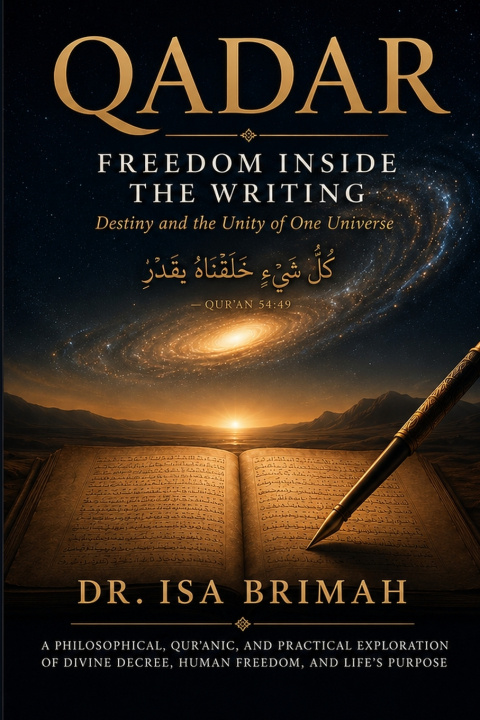
What if the debate has been asking the wrong question?
Most discussions of destiny and free will begin by asking how much freedom a human being has. QADAR begins somewhere else - with the universe itself.
Before asking whether man is free, it asks a harder question: can one coherent reality have two independent ultimate sources of what becomes actual? The answer, argued from reason alone before a single verse is quoted, is no. And once that is established, the question of human freedom changes shape entirely.
From there the book turns to what has been disclosed. The Pen. The Preserved Tablet. The verses on guidance and misguidance that trouble every honest reader. Adam and Musa. Erasure and confirmation. It faces the hardest texts rather than the convenient ones, and states every objection at full strength before answering it.
What emerges is a position the book calls freedom inside the writing: the servant's willing is genuinely his, because it proceeds through his own perception, reasons, deliberation and intention - and it is written, because that very agency belongs to the history Allah knew, willed and created. Specification is not substitution. The deliberation was not bypassed. It was written as deliberation.
And then the book does something rare. It stops.
Coherence, it argues, is not justice. Having shown that comprehensive decree and genuine human agency do not contradict one another, it refuses to pretend that this settles whether the arrangement is just. The closing chapters name the remainder honestly, mark exactly where understanding ends, and distinguish trust from proof.
For anyone who has ever wrestled with fate, personal responsibility and divine justice - and for everyone who was told to stop asking.


Informácie o knihe
Angličtina

Darujte túto knihu ešte dnes
Je to jednoduché
1 Pridajte knihu do košíka a vyberte možnosť doručiť ako darček 2 Obratom Vám zašleme poukaz 3 Knihu zašleme na adresu obdarovanéhoAhoj! Som Libroamiko, tvoj knižný radca.
Ako ti môžem pomôcť?