
 Kontakt
 Ako nakupovať
Doručenie
Nákupný poradca
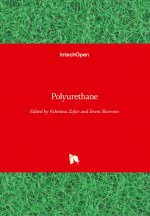
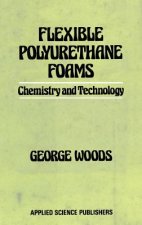
Polyurethane
 Angličtina
 95 b
95 b
30 dní na vrátenie tovaru
Zákazníci tiež kúpili






 /
/
 Brožovaná
 20.25
€
20.25
€

 /
Brožovaná
13.06
€
/
Brožovaná
13.06
€

 /
Brožovaná
50.94
€
/
Brožovaná
50.94
€



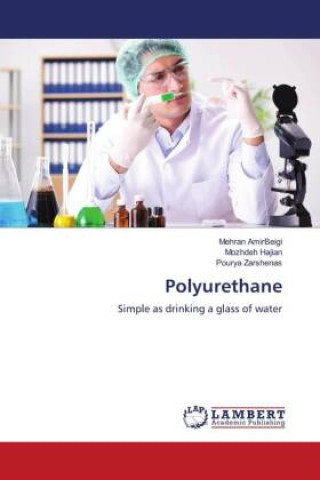
The chemistry of PUs leads to them being grouped with other compounds that are often collectively referred to as reaction polymers. These compounds include phenolics, unsaturated polyesters and epoxies Generally, PUs are often synthesized from the reaction between an isocyanate and polyol molecule in the presence of either a catalyst or ultraviolet light activation.39 These isocyanate and polyol molecules should necessarily contain two or more isocyanate groups (R-(N C O)n 2) and hydroxyl groups (R'-(OH)n 2), respectively. The exhibited properties of the PUs usually depend on the types of polyols and isocyanates from which they were made.40 Generally, soft elastic polymers can be produced from flexible long segments of polyols, whereas rigid and tough polymers are obtained via a higher amount of cross-linking. Stretchy polymers can be obtained through long chains with low cross-linking, whereas hard polymers can be obtained from shorter chains with high cross-linking. On the other hand, a combination of long chains with average cross-linking would produce polymers that are suitable for foam making.


Informácie o knihe
Angličtina
Kategórie

Darujte túto knihu ešte dnes
Je to jednoduché
1 Pridajte knihu do košíka a vyberte možnosť doručiť ako darček 2 Obratom Vám zašleme poukaz 3 Knihu zašleme na adresu obdarovanéhoMohlo by vás tiež zaujímať









 /
Brožovaná
91.65
€
/
Brožovaná
91.65
€


Ahoj! Som Libroamiko, tvoj knižný radca.
Ako ti môžem pomôcť?