
 Kontakt
 Ako nakupovať
Doručenie
Nákupný poradca
 Angličtina
 38 b
38 b
 Pripravujeme
 Nové
Nové
30 dní na vrátenie tovaru

What do the toys we give children actually teach them?
More than we think. And more deliberately than most of us are comfortable admitting.
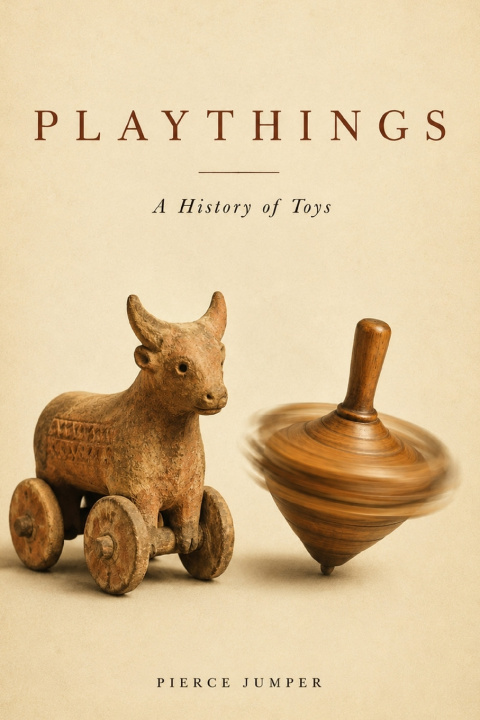
Playthings: A History of Toys traces the four-thousand-year story of the objects we put in children's hands - from a clay ox found in the ruins of the Indus Valley to the AI-powered companions that listen to children's conversations and transmit them to cloud servers. Along the way, it uncovers a history that is surprising, sometimes disturbing, and impossible to look away from.
Toys have always reflected the societies that made them. The toy soldiers that flooded European markets in 1914 were propaganda. The racist mechanical banks of the 1880s were ideology delivered through play. Barbie told girls their future could be anything - and that the prerequisite was an anatomically impossible body. G.I. Joe told boys that masculinity meant physical dominance, and quietly escalated his biceps to impossible proportions over three decades while nobody noticed. The 1984 deregulation of children's television created the pink-and-blue toy aisle that most people assume has always existed - it hadn't.
But Playthings is also the story of the people who pushed back. Louis Smith, who built the Shindana Toy Factory in the ruins of Watts and put Baby Nancy - a doll with Afrocentric features and natural hair - on shelves by Thanksgiving 1968. Kenneth and Mamie Clark, whose doll experiments testified before the Supreme Court and helped end school segregation. Marlo Thomas, who created Free to Be You and Me and watched a generation of toy marketers ignore everything it had achieved.
And underneath all of it, the science of why play matters at all - why every mammal does it, what happens to brains deprived of it, and why the ancient clay ox and the modern LEGO brick are doing the same fundamental work for the children who hold them.
Playthings is history as it should be written: specific, honest, and full of people who were trying to figure out - as we still are - what we owe to children, and what we are telling them without meaning to.
Perfect for readers of Stuff Matters, The Bomber Mafia, Hidden Figures, and The Warmth of Other Suns - narrative nonfiction that finds the big story inside a subject everyone thought they already understood.


Informácie o knihe
Angličtina
