
 Kontakt
 Ako nakupovať
Doručenie
Nákupný poradca
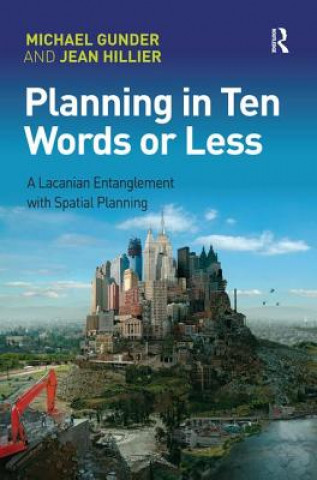
Planning in Ten Words or Less
 Angličtina
 633 b
633 b
Až 30 dní na vrátenie tovaru
Zákazníci tiež kúpili


 /
/
 Brožovaná
 22.77
€
22.77
€





 /
/
 Audio CD
17.55
€
Audio CD
17.55
€


 /
Brožovaná
23.07
€
/
Brožovaná
23.07
€



 /
Brožovaná
26.39
€
/
Brožovaná
26.39
€
 /
Brožovaná
38.83
€
/
Brožovaná
38.83
€



 /
Brožovaná
60.01
€
/
Brožovaná
60.01
€



Spatial planning practice employs a discourse full of terms and buzzwords, such as 'social justice', 'environmental sustainability', 'public interest' or 'community engagement'. This book takes a Lacanian, and related post-structuralist perspective to demythologise ten of the most heavily utilised terms in spatial planning: rationality, the good, certainty, risk, growth, globalisation, multi-culturalism, sustainability, responsibility and 'planning' itself. It argues that these terms, and others, are mere 'empty signifiers', meaning everything and nothing. Drawing on examples of planning practice and process from the UK, North America and Australasia, it suggests that spatial and urban planning is largely based on the construction and deployment of ideological knowledge claims. Also that each of these contested ideals puts forward its own separate definition of the ten words in an attempt to dominate the theoretical debate. In addition, it perceives that the words themselves act as sublime objects of planning and societal desire for a 'better world'. The book concludes that planning in the 21st Century should move on from seeking the impossibility of idealised end-states to a process of contingent trajectory.


Informácie o knihe
Angličtina

Darujte túto knihu ešte dnes
Je to jednoduché
1 Pridajte knihu do košíka a vyberte možnosť doručiť ako darček 2 Obratom Vám zašleme poukaz 3 Knihu zašleme na adresu obdarovanéhoMohlo by vás tiež zaujímať
 /
Pevná
28.11
€
/
Pevná
28.11
€
 /
Brožovaná
14.84
€
/
Brožovaná
14.84
€


 /
Brožovaná
17.36
€
/
Brožovaná
17.36
€


 /
Brožovaná
21.78
€
/
Brožovaná
21.78
€
 /
Pevná
36.12
€
/
Pevná
36.12
€


 /
Brožovaná
31.62
€
/
Brožovaná
31.62
€





Ahoj! Som Libroamiko, tvoj knižný radca.
Ako ti môžem pomôcť?