
 Kontakt
 Ako nakupovať
Doručenie
Nákupný poradca
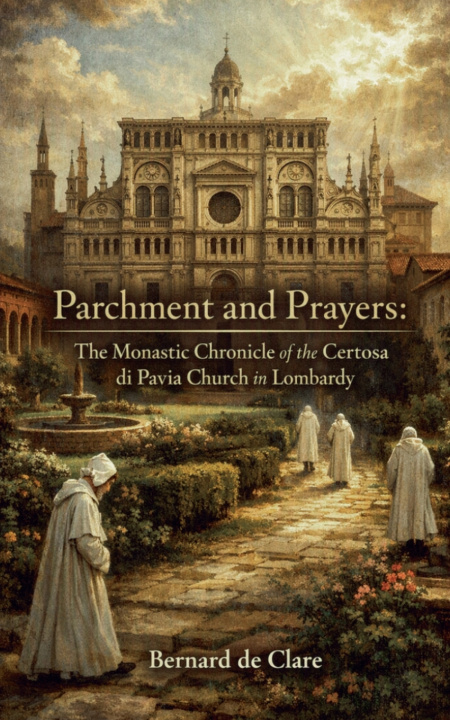
Parchment and Prayers
The Monastic Chronicle of the Certosa di Pavia Church in Lombardy
 Angličtina
 47 b
47 b
 Nové
Nové
Až 30 dní na vrátenie tovaru

Can a building hold the weight of an empire's soul, or does stone merely outlive the men who built it?
When Duke Gian Galeazzo Visconti laid the first stone of the Certosa di Pavia in the hot August of 1396, he was not merely constructing a church; he was carving a political statement in marble and securing a heavenly intercessor for his line. Nestled in the fertile plains of Lombardy, this grand sanctuary became the intersection where raw ducal power collided with the silent, ascetic devotion of the Carthusian Order. For the seasoned history enthusiast who refuses to settle for sanitized, surface-level summaries, Parchment and Prayers: The Monastic Chronicle of the Certosa di Pavia Church in Lombardy offers an unyielding, meticulously documented descent into the true reality of the Italian Renaissance. This is not a book for casual tourists. It is a work written for those who demand historical precision, primary context, and the raw, unvarnished truth of how faith and ambition forged Western civilization.
Step through the silent Great Cloister where twenty-four Carthusian monks spent their lives in absolute quiet, writing, praying, and enduring the harsh solitude of the Pavese plain. Walk the marble floors where the artistic genius of Giovanni Antonio Amadeo and Cristoforo Solari was unleashed under the ruthless patronage of Ludovico Sforza. Discover how the iconic marble façade became a visual library of salvation history, intricately carved with biblical patriarchs, classical motifs, and imperial iconography. Feel the tension of 1525, when the fate of Europe was decided outside the monastery walls at the Battle of Pavia, as the artillery fire of King Francis I and Emperor Charles V echoed through the vaulted, star-painted ceilings of the nave.
Author Bernard de Clare brings an authoritative eye to every detail, tracing the sanctuary's history from its late-Gothic inception through its Renaissance evolution, its 18th-century Austrian suppression under Joseph II, and its modern preservation under Cistercian care. Readers will examine the exquisite 15th-century hippo-ivory Embriaco triptych, dissect the spiritual understatedness of Ambrogio Bergognone's frescoes, and understand the precise architectural adaptations required to transition from Gothic verticality to Renaissance symmetry. Every chapter grounds its narrative in historical documentation, ensuring that every date, royal decree, and artistic commission reflects verified historical record.
If you are a reader who hungers to look beyond the velvet ropes of modern museums, to feel the cold marble underfoot and understand the complex motives of dukes, popes, and silent monks, this chronicle is your masterclass. It bridges the gap between scholarly rigor and deep spiritual resonance, offering a profound look at a sacred monument that weathered political collapses, royal deaths, and foreign invasions while preserving its consecrated purpose.
Will you leave the sanctuary of the past undiscovered, or will you step across the threshold and hear the silent stone speak?


Informácie o knihe
Angličtina

Darujte túto knihu ešte dnes
Je to jednoduché
1 Pridajte knihu do košíka a vyberte možnosť doručiť ako darček 2 Obratom Vám zašleme poukaz 3 Knihu zašleme na adresu obdarovanéhoAhoj! Som Libroamiko, tvoj knižný radca.
Ako ti môžem pomôcť?