
 Kontakt
 Ako nakupovať
Doručenie
Nákupný poradca
Pappus & Sonder
 Angličtina
 68 b
68 b
 Pripravujeme
 Nové
Nové
 Vydanie 16. 10. 2026
Až 30 dní na vrátenie tovaru

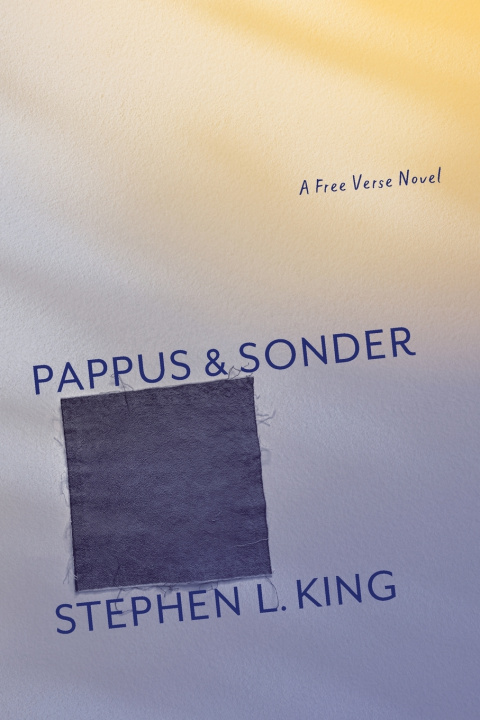
Pappus and Sonder is a multi-decade literary novel told in first-person free verse by Luke Moore, tracing the long emotional consequences of a formative teenage summer in 1970s Melbourne.
At its centre are four adolescents: Luke; Coral, his closest childhood companion; Ruby, charismatic and volatile; and Josh, confident and physical. What begins as a tight-knit troupe fractures under the pressures of attraction, rivalry, and misread intention. Luke loves Coral quietly but hesitates. Coral, drawn initially to Josh's physicality and sensing his potential, chooses him-and then struggles with her teenage impulse to shape what she has chosen. Ruby, perceptive and restless, destabilises the group's fragile balance, sometimes from bravado, sometimes from fear. A sequence of crossed boundaries and betrayals leaves bonds altered in ways none of them fully understand.
The emotional fault line deepens when Coral survives the real-life Granville train disaster, an event that permanently fractures her sense of control and her assumption that she stands at the centre of events. The trauma becomes an unspoken undercurrent shaping her adult caution and self-protection. Luke, meanwhile, continues a pattern of hesitation-watching rather than acting-allowing moments of clarity with Coral to pass.
As the friends disperse, Luke studies architecture and enters adulthood uncertainly. He forms an intimate relationship with Jenny, a young woman drawn to movement and reinvention. When that relationship fractures, the loss reverberates. In Paris, Ruby re-enters his life, and desire resurfaces-intense but unsustainable, fuelled in part by unfinished history and recent heartbreak.
After Ruby and Jenny, Luke meets Rhea, thoughtful and grounded. With her, intimacy is steadier, less performative. Their relationship matures into marriage and children, offering Luke the stability he once resisted. Yet memory remains active beneath the surface.
Late in the novel, an earlier episode from Luke's early twenties surfaces: a trip to Bangkok involving Patsaporn and a transactional encounter he has long suppressed. This repressed moral crossroads forces him to confront the cost of detachment and the ways he has avoided responsibility for the emotional weight of his actions.
Years later, Ruby reappears unexpectedly. The reunion brings recognition rather than romance: each of them has paid differently. Coral's life has diverged, shaped by survival and restraint. Rhea stands as the architectural constant in Luke's adulthood-an anchor and a quiet measure of his growth. The novel resists reconciliation or symmetry. Healing does not distribute evenly.
Framed by the epigraph "all those kids"-a reference to the atomic bomb-the narrative expands from personal regret to moral awareness. Luke comes to understand "sonder": the recognition that every life carries invisible gravity. "Pappus," like the drifting seed head of a dandelion, suggests dispersal and unintended consequence.
In its closing movement, the novel returns to its beginning. The summer that once felt selfish becomes a lifelong reckoning. Luke cannot alter what happened. What changes is how fully he sees it-and how carefully he now holds the lives that intersected with his own.


Informácie o knihe
Angličtina

Darujte túto knihu ešte dnes
Je to jednoduché
1 Pridajte knihu do košíka a vyberte možnosť doručiť ako darček 2 Obratom Vám zašleme poukaz 3 Knihu zašleme na adresu obdarovanéhoAhoj! Som Libroamiko, tvoj knižný radca.
Ako ti môžem pomôcť?