
 Kontakt
 Ako nakupovať
Doručenie
Nákupný poradca
 Angličtina
 249 b
249 b
Až 30 dní na vrátenie tovaru
Zákazníci tiež kúpili



 /
/
 Pevná
Pevná
 31.75
€
31.75
€




 /
Kniha
36.38
€
/
Kniha
36.38
€















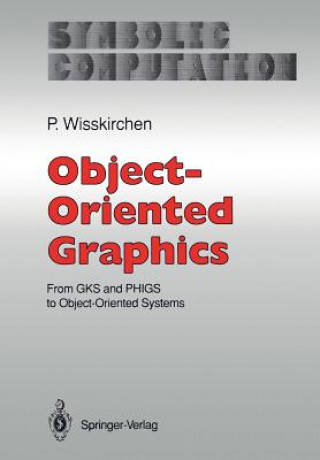
At present, object-oriented programming is emerging from the research labora tories and invading into the field of industrial applications. More and more products have been implemented with the aid of object-oriented programming techniques and tools, usually as extensions of traditional languages in hybrid development systems. Some of the better known examples are OSF-Motif, News, Objective-C on the NeXT computer, the C extension C++, and CLOS an object oriented extension of LISP. All of these developments incorporate interactive graphics. Effective object-oriented systems in combination with a graphics kernel does it mean that the field of computer graphics has now become merely an aspect of the object-oriented world? We do not think so. In spite of interesting individual developments, there are still no sound object-oriented graphics sys tems available. If it is desired to develop a complex graphics application embed ded in a window-oriented system then it is still necessary to work with elemen tary tools. What is to be displayed and interactively modified inside a window must be specified with a set of graphics primitives at a low level, or has to be written with a standardized graphics kernel system such as GKS or PHIGS, i. e. , by kernels specified and implemented in a non-object-oriented style. With the terms GKS and PHIGS we enter the world of international graphics standards. GKS and PHIGS constitute systems, not mere collections of graphics primitives.


Informácie o knihe
Angličtina

Darujte túto knihu ešte dnes
Je to jednoduché
1 Pridajte knihu do košíka a vyberte možnosť doručiť ako darček 2 Obratom Vám zašleme poukaz 3 Knihu zašleme na adresu obdarovanéhoMohlo by vás tiež zaujímať

 /
Pevná
373.60
€
/
Pevná
373.60
€





 /
Pevná
28.54
€
/
Pevná
28.54
€















Ahoj! Som Libroamiko, tvoj knižný radca.
Ako ti môžem pomôcť?