
 Kontakt
 Ako nakupovať
Doručenie
Nákupný poradca
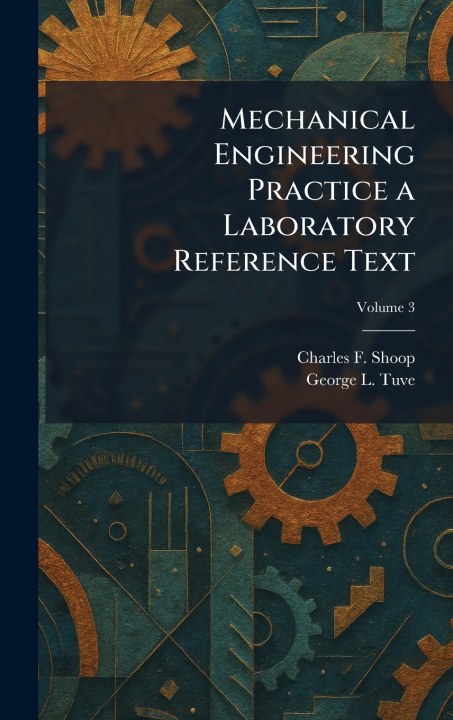
Mechanical Engineering Practice a Laboratory Reference Text
 Angličtina
 90 b
90 b
30 dní na vrátenie tovaru

"Mechanical Engineering Practice a Laboratory Reference Text" is a comprehensive guide designed to bridge the gap between theoretical engineering principles and practical laboratory application. Authored by Charles F. Shoop and George L. Tuve, this volume serves as a foundational resource for conducting experiments and measurements within the field of mechanical engineering.
The text covers a broad spectrum of essential topics, including the calibration of instruments, the study of fuels and lubricants, and the testing of steam and internal combustion engines. Through detailed methodologies and standardized procedures, the work provides clear instructions for analyzing the performance of various mechanical systems and components. It emphasizes the importance of accuracy in data collection and the rigorous interpretation of experimental results.
Students and practitioners alike will find value in its structured approach to laboratory work, which encompasses everything from fundamental fluid mechanics to complex heat transfer observations. "Mechanical Engineering Practice a Laboratory Reference Text" remains a significant historical reference for understanding the evolution of experimental techniques and the rigorous standards that have shaped the mechanical engineering profession.
This work has been selected by scholars as being culturally important, and is part of the knowledge base of civilization as we know it. This work was reproduced from the original artifact, and remains as true to the original work as possible. Therefore, you may see the original copyright references, library stamps (as most of these works have been housed in our most important libraries around the world), and other notations in the work.
This work is in the public domain in the United States of America, and possibly other nations. Within the United States, you may freely copy and distribute this work, as no entity (individual or corporate) has a copyright on the body of the work.
As a reproduction of a historical artifact, this work may contain missing or blurred pages, poor pictures, errant marks, etc. Scholars believe, and we concur, that this work is important enough to be preserved, reproduced, and made generally available to the public. We appreciate your support of the preservation process, and thank you for being an important part of keeping this knowledge alive and relevant.


Informácie o knihe
Angličtina
