
 Kontakt
 Ako nakupovať
Doručenie
Nákupný poradca
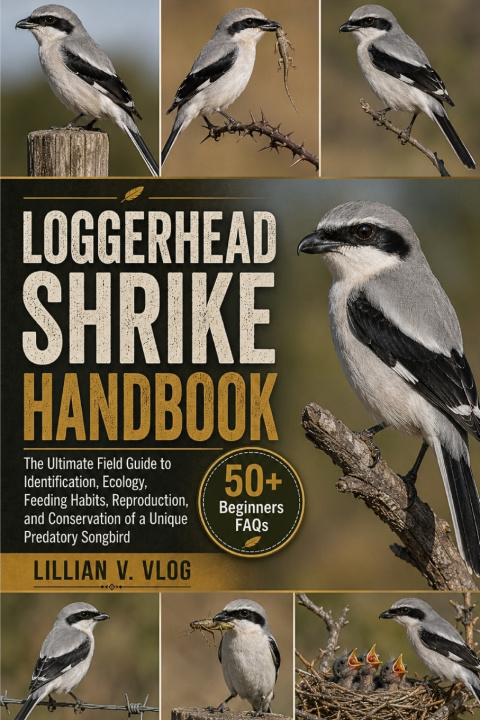
LOGGERHEAD SHRIKE HANDBOOK
The Ultimate Field Guide To Identification, Ecology, Feeding Habits, Reproduction, And Conservation Of A Unique Predatory Songbird
 Angličtina
 55 b
55 b
 Nové
Nové
Až 30 dní na vrátenie tovaru

INTRODUCTION TO THE LOGGERHEAD SHRIKE
The Loggerhead Shrike is one of North America's most fascinating and paradoxical songbirds. At first glance, it appears unassuming-small to medium in size, perched quietly on fence posts, power lines, or thorny shrubs. Yet behind this calm exterior lies a highly specialized predator with behaviors more commonly associated with birds of prey. This combination of songbird anatomy and raptor-like hunting strategy makes the Loggerhead Shrike one of the most unique avian species in the world.
Scientifically known as Loggerhead Shrike (Lanius ludovicianus), this bird has earned a variety of common names that reflect both its appearance and its remarkable behavior. It is often called the "butcher bird," a name derived from its habit of impaling prey on thorns or sharp objects. This gruesome yet efficient behavior has fascinated ornithologists, bird watchers, and naturalists for centuries.
Despite its intimidating reputation, the Loggerhead Shrike is not a large or powerful predator in the traditional sense. Instead, it is a master of adaptation-using intelligence, precision, and environmental tools to overcome its physical limitations. This chapter explores its identity, naming history, biological classification, and the unique traits that distinguish it from other songbirds.
Overview of the Species
The Loggerhead Shrike belongs to the family Laniidae, a group of birds commonly referred to as shrikes. The genus name Lanius is derived from the Latin word for "butcher," a direct reference to the species' feeding behavior. The Loggerhead Shrike is the only shrike native to most of North America, making it a particularly important species for understanding the ecological role of shrikes in this region.
Adult Loggerhead Shrikes are medium-sized passerine birds, typically measuring between 20 to 23 centimeters in length. They have a sturdy build with a relatively large head compared to their body size-hence the name "loggerhead," which historically referred to someone with a large or thick head. Their plumage is a striking combination of soft gray on the back, white underparts, and bold black markings across the wings and mask-like stripe through the eyes.
This facial mask gives the bird a distinctive "bandit-like" appearance, often reinforcing its reputation as a stealthy and calculating hunter. Unlike raptors, Loggerhead Shrikes do not possess talons designed for grasping prey. Instead, they rely on their sharp, hooked beak to subdue and process food.
One of the most defining characteristics of this species is its hunting strategy. Rather than chasing prey through the air or ground, the Loggerhead Shrike typically hunts from elevated perches. From these vantage points, it scans open landscapes for insects, small reptiles, amphibians, and even small mammals. Once prey is spotted, it launches a swift and direct attack, relying on surprise rather than sustained pursuit.
However, what truly sets this species apart is what happens after the kill. Because shrikes lack strong gripping feet like hawks or eagles, they have developed a unique method of handling and storing food. They impale prey onto thorns, barbed wire, or sharp twigs. This behavior not only secures the prey for consumption but also helps tear it into manageable pieces. In some cases, shrikes create what are effectively "larders," storing multiple prey items for later consumption.


Informácie o knihe
Angličtina
Kategórie

Darujte túto knihu ešte dnes
Je to jednoduché
1 Pridajte knihu do košíka a vyberte možnosť doručiť ako darček 2 Obratom Vám zašleme poukaz 3 Knihu zašleme na adresu obdarovanéhoAhoj! Som Libroamiko, tvoj knižný radca.
Ako ti môžem pomôcť?