
 Kontakt
 Ako nakupovať
Doručenie
Nákupný poradca
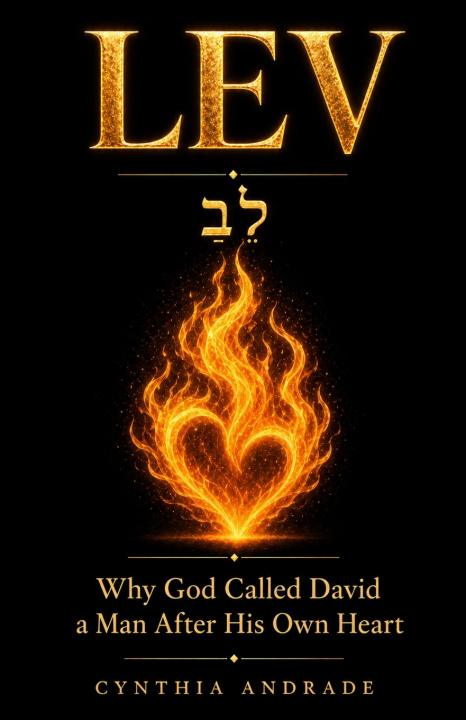
LEV
Why God Called David a Man After His Own Heart - A Hebrew Word Study on Faith, Failure, and Restoration
 Angličtina
 24 b
24 b
 Nové
Nové
30 dní na vrátenie tovaru

How could God call "a man after his own heart" someone who lied, committed adultery, and had an innocent man killed to cover what he had done?
For centuries, that question has been repeated without a real answer. Because the question begins from an assumption few have stopped to challenge out loud: that after God's own heart means flawless.
It does not.
The original word is lev. And lev in ancient Hebrew is not the heart that feels. It is the center of what a person truly is: their will, their character, their inner direction when no one is watching.
This book returns to the original Hebrew text to read David's story slowly. From the boy no one called when the prophet arrived. From the young man who spent two decades tending sheep after being told he would be king. From the man who had his enemy asleep at his feet and chose not to touch him. From the king who one night looked out from a balcony and made the worst decision of his life.
And from the man who, after all of that, wrote one of the most honest texts on brokenness in all of ancient literature.
LEV is not a defense of David or a condemnation. It is an attempt to understand him. And in that process, to understand something about the nature of a lev oriented toward God: that it can fail, that it can fall, that it can make grave mistakes. And that it keeps pointing in the same direction after the fall.
That is what God saw in David.
And it is what He is still looking for today.
This book is for you if:
- You know the story of David but sense that something essential is missing.
- You are in a long season of waiting between a promise and its fulfillment.
- You have made a serious mistake and do not know if there is a way back.
- You want to read the Bible from the original Hebrew without prior knowledge.
- You are looking for spiritual books with intellectual rigor, not easy answers.
Words That Remain · Book No. 1


Informácie o knihe
Angličtina
Kategórie
