
 Kontakt
 Ako nakupovať
Doručenie
Nákupný poradca
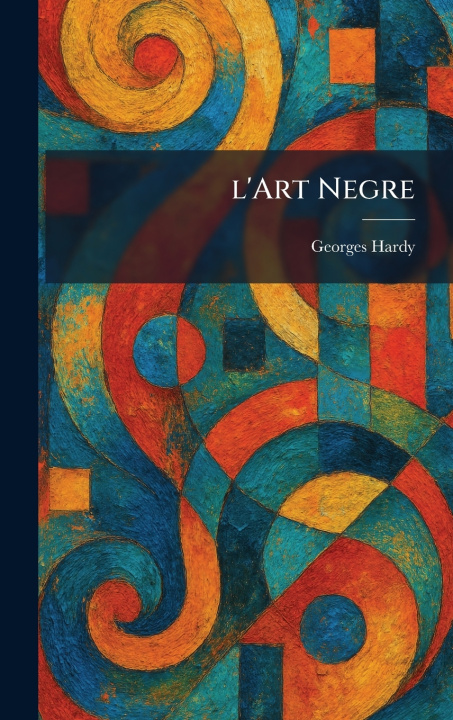
L'Art Negre
 Francúzština
 75 b
75 b
30 dní na vrátenie tovaru

"L'Art Nègre" de Georges Hardy est une étude approfondie de la production artistique et culturelle du continent africain. Dans cet ouvrage, l'auteur analyse avec rigueur les caractéristiques stylistiques et la profondeur spirituelle des masques, des statues et des objets rituels, cherchant à définir une esthétique propre aux sociétés africaines. Hardy explore les liens étroits entre la création artistique et les structures sociales, religieuses et politiques, offrant ainsi une perspective globale sur la créativité et le symbolisme de ces peuples.
En examinant les formes, les rythmes et les matériaux, "L'Art Nègre" souligne l'importance de la fonction de l'objet dans la pensée africaine. L'auteur s'attache à démontrer que ces Åuvres ne sont pas de simples curiosités ethnographiques, mais de véritables expressions artistiques méritant une place d'honneur dans l'histoire universelle de l'art. Ce texte constitue un témoignage historique essentiel sur la manière dont l'art africain a été perçu et théorisé au début du XXe siècle, tout en soulignant son influence durable sur les courants de la modernité occidentale. C'est une Åuvre de référence pour les passionnés d'histoire de l'art et d'anthropologie.
This work has been selected by scholars as being culturally important, and is part of the knowledge base of civilization as we know it. This work was reproduced from the original artifact, and remains as true to the original work as possible. Therefore, you may see the original copyright references, library stamps (as most of these works have been housed in our most important libraries around the world), and other notations in the work.
This work is in the public domain in the United States of America, and possibly other nations. Within the United States, you may freely copy and distribute this work, as no entity (individual or corporate) has a copyright on the body of the work.
As a reproduction of a historical artifact, this work may contain missing or blurred pages, poor pictures, errant marks, etc. Scholars believe, and we concur, that this work is important enough to be preserved, reproduced, and made generally available to the public. We appreciate your support of the preservation process, and thank you for being an important part of keeping this knowledge alive and relevant.


Informácie o knihe
Francúzština
