
 Kontakt
 Ako nakupovať
Doručenie
Nákupný poradca
 Angličtina
 141 b
141 b
 Pripravujeme
 Nové
Nové
Až 30 dní na vrátenie tovaru

Book Description
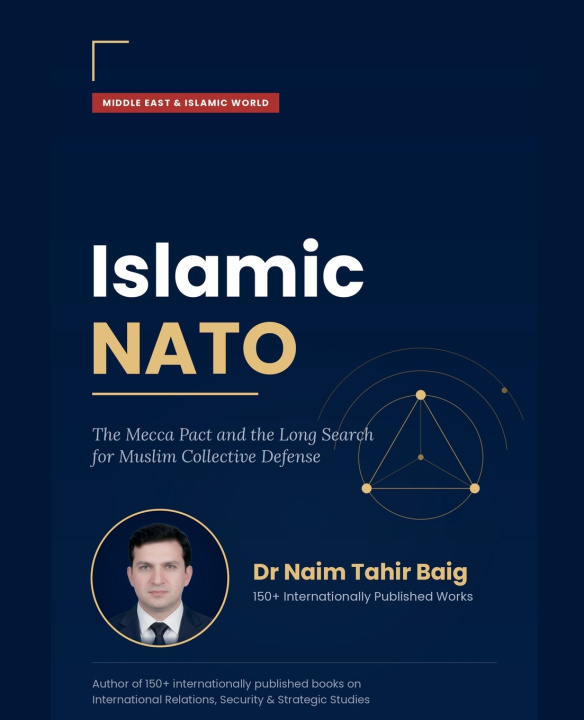
Islamic NATO: The Mecca Pact and the Long Search for Muslim Collective Defense by Dr. Naim Tahir Baig
On September 9, 2025, Israeli warplanes struck a residential compound in Doha where Hamas leaders had gathered to weigh a ceasefire proposal. Within a week, fifty-seven states convened in emergency session and produced a lengthy communiqué - and no mechanism. Eight days later, Saudi Arabia and Pakistan quietly signed what the summit could not: a binding mutual-defense treaty. Eleven months on, that bilateral pact had grown into a trilateral one, binding Riyadh, Ankara, and Islamabad under a single collective-defense clause signed in the holy city of Mecca. For the first time in more than seventy years of talk about an "Islamic NATO," the Muslim world has a live, signed instrument to evaluate rather than a wish list to imagine.
This book asks whether that instrument - and the wider ambition it has revived - can become something resembling NATO in more than name. Dr. Naim Tahir Baig treats "Islamic NATO" as a precise term of art, not a rhetorical flourish, measuring every pact discussed against three institutional benchmarks NATO itself required: a standing integrated command, a pooled and cost-shared funding mechanism, and a continuously sitting political body empowered to act between crises rather than only in response to them. Judged against that yardstick, the book traces the full arc of pan-Islamic security cooperation - from the 1950 Arab Collective Security Pact and the coalition-building that followed the Arab Spring, through the Gaza war's regional shockwaves, the 2025 Qatar crisis, and the 2026 Iran conflict, to the Saudi-Pakistan Strategic Mutual Defence Agreement and the trilateral Mecca Agreement that followed it.
Along the way, the book examines the mechanisms any such alliance would need - collective-defense clauses, command interoperability, shared industrial and economic pillars - against the deterrence value, diplomatic leverage, and inclusivity models a functioning pact could offer. It weighs these possibilities against the hurdles that have wrecked nearly every prior attempt: sectarian and ethnic fault lines, dependence on external patrons, capability gaps that no summit communiqué can close, and the limited record of existing bodies such as the Islamic Military Counter Terrorism Coalition and the Gulf Cooperation Council. The final chapters turn from diagnosis to prescription, laying out the realistic pathways forward from the Mecca baseline and what policymakers who want the process to succeed would actually need to do.
Grounded in primary treaty texts, official statements, and a wide range of regional and international reporting, NATO-like Alliance Among Muslim Nations is a rigorous, clear-eyed assessment for readers who want to understand not whether an Islamic NATO is rhetorically popular, but whether it is institutionally possible - and what stands in the way.


Informácie o knihe
Angličtina

Darujte túto knihu ešte dnes
Je to jednoduché
1 Pridajte knihu do košíka a vyberte možnosť doručiť ako darček 2 Obratom Vám zašleme poukaz 3 Knihu zašleme na adresu obdarovanéhoAhoj! Som Libroamiko, tvoj knižný radca.
Ako ti môžem pomôcť?