
 Kontakt
 Ako nakupovať
Doručenie
Nákupný poradca
 Angličtina
 38 b
38 b
 Nové
Nové
Až 30 dní na vrátenie tovaru

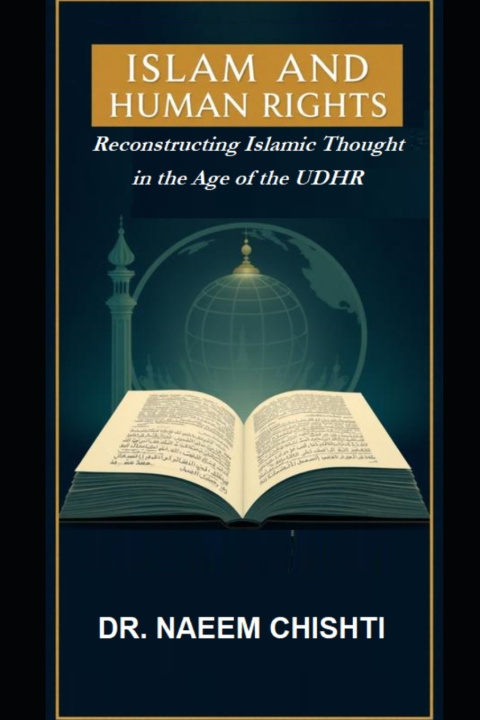
This book examines one of the most contested questions in contemporary Islamic thought: how can a religious and intellectual tradition with a long history of moral, legal, and political reflection engage meaningfully with the modern universal human-rights order?
At the centre of this book is the Universal Declaration of Human Rights, adopted by the United Nations General Assembly in 1948. The UDHR places human dignity, equality, liberty, freedom of conscience, and protection from arbitrary power at the heart of an international normative framework. It emerged through participation by representatives from different legal and cultural backgrounds and has subsequently influenced a large body of international and domestic human-rights lawThe book asks what this development means for Muslim societies and, equally importantly, what Islamic intellectual traditions can contribute to the continuing development of universal human-rights thought.
Rather than presenting Islam and human rights as inherently harmonious or irreconcilably opposed, the book adopts a critical middle path. It distinguishes between Islam as a faith, Islamic intellectual traditions, historical jurisprudence, modern state legislation, and contemporary political uses of religion. This distinction is essential because many apparent conflicts between Islam and human rights arise not from religious belief itself but from historically developed legal interpretations, modern political institutions, or selective uses of religious authority.
The book explores the historical emergence of modern human rights, the intellectual foundations of the Universal Declaration, and the principal debates surrounding its universality. It considers questions of human dignity, equality before the law, freedom of conscience, religious liberty, family life, personal morality, and protection from violence and arbitrary power. Particular attention is given to the difficult question of whether universal rights require cultural uniformity. The argument developed throughout is that universality should not mean Western cultural monopoly, just as cultural diversity should not become a justification for denying fundamental rights.
A major concern of the book is the distinction between rights formally recognised and rights effectively enjoyed. Constitutional guarantees, independent courts, free media, civil society, democratic accountability, and international oversight are examined as institutional conditions necessary for translating human-rights principles into lived realities. The book therefore moves beyond purely theological or textual debates and considers the political and institutional structures through which rights are protected or undermined.
The work also examines what Muslim societies may legitimately preserve as culturally and religiously distinctive. Family and social values, religious education, personal morality, and collective religious life are considered within a framework that protects both communal freedom and individual dignity. The objective is neither to secularise Muslim societies nor to exempt religious institutions from universal standards. Instead, the book proposes a distinction between voluntary religious and cultural commitment and state-enforced conformity.
The concluding argument is that reconstruction of Islamic thought should be understood as a continuing intellectual responsibility. Contemporary Muslim thinkers need not choose between abandoning their religious heritage and rejecting universal human rights. They can critically revisit inherited interpretations, recover ethical resources within Islamic thought, engage international human-rights principles, and contribute to a genuinely plural conception of universalism. This approach is consistent with the broader reformist scholarship associated with thinkers such as Abdullahi Ahmed An-Na'im, who explored the relationship between Islamic identity, legal reform, and universal human rights.


Informácie o knihe
Angličtina

Darujte túto knihu ešte dnes
Je to jednoduché
1 Pridajte knihu do košíka a vyberte možnosť doručiť ako darček 2 Obratom Vám zašleme poukaz 3 Knihu zašleme na adresu obdarovanéhoAhoj! Som Libroamiko, tvoj knižný radca.
Ako ti môžem pomôcť?