
 Kontakt
 Ako nakupovať
Doručenie
Nákupný poradca
 Angličtina
 49 b
49 b
 Nové
Nové
30 dní na vrátenie tovaru

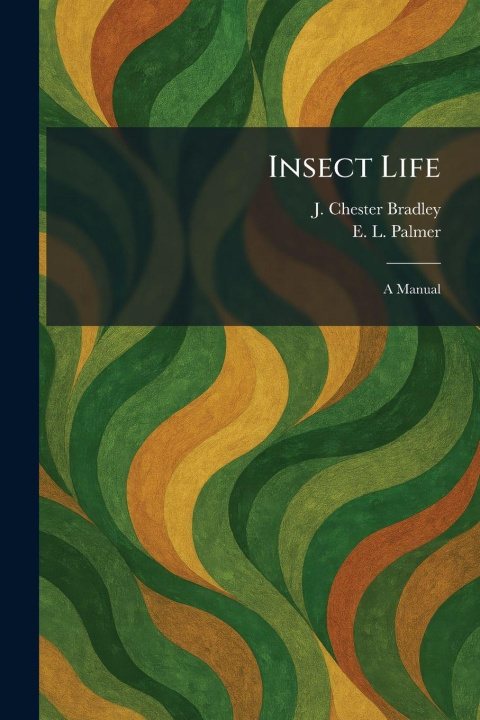
"INSECT LIFE: A Manual" serves as a comprehensive and practical guide to the fascinating world of entomology. Written by J. Chester Bradley and E. L. Palmer, this work provides a structured approach to identifying and understanding the vast array of insects that inhabit our environment. The manual is designed to facilitate nature study, offering detailed insights into the anatomy, classification, and life cycles of various insect orders.
Readers will find valuable information on how to observe insects in their natural habitats and how to distinguish between different species based on physical characteristics. Beyond mere identification, the book explores the ecological roles that insects play and their complex behaviors. Whether used as an educational resource or a field companion, "INSECT LIFE: A Manual" remains a significant contribution to the study of natural history, emphasizing the importance of rigorous observation and scientific inquiry. Its clear language and systematic organization make it an accessible entry point for students and enthusiasts alike who wish to deepen their appreciation for the smaller creatures of the natural world and their place in the ecosystem.
This work has been selected by scholars as being culturally important, and is part of the knowledge base of civilization as we know it. This work was reproduced from the original artifact, and remains as true to the original work as possible. Therefore, you may see the original copyright references, library stamps (as most of these works have been housed in our most important libraries around the world), and other notations in the work.
This work is in the public domain in the United States of America, and possibly other nations. Within the United States, you may freely copy and distribute this work, as no entity (individual or corporate) has a copyright on the body of the work.
As a reproduction of a historical artifact, this work may contain missing or blurred pages, poor pictures, errant marks, etc. Scholars believe, and we concur, that this work is important enough to be preserved, reproduced, and made generally available to the public. We appreciate your support of the preservation process, and thank you for being an important part of keeping this knowledge alive and relevant.


Informácie o knihe
Angličtina
