
 Kontakt
 Ako nakupovať

Doručenie
Nákupný poradca
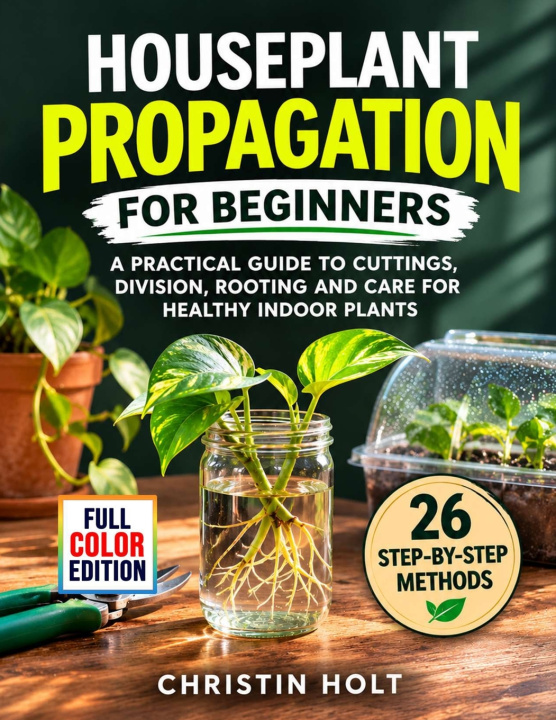
Houseplant Propagation for Beginners
A Practical Guide to Cuttings, Division, Rooting and Care for Healthy Indoor Plants
 Angličtina
 64 b
 Pripravujeme
 Nové
Až 30 dní na vrátenie tovaru

A pothos vine has grown past the end of the shelf, a friend admires it out loud, and you snip a stem and drop it in a glass of water because that is what everyone says to do. Three weeks on, the leaves have yellowed and the stem is soft and dark at the waterline, and the cutting you meant to give away is gone. You stand at the sink wondering what people with full windowsills know that you do not, and whether it can be learned in a few weekends of practice.
This book answers with the methods university extension services actually publish, taught one plant at a time and checked against those sources, so the next stem you cut has a plan behind every single step.
Seventeen Chapters, Twenty-Six Methods
- Read a plant's growth habit before you cut, so you know at once whether it wants stem cuttings, division, offsets, layering or a single leaf
- Root pothos, heartleaf philodendron, English ivy and inch plant tips in water or perlite, then pot them once several healthy roots have formed
- Cut dumb cane and Dracaena fragrans canes into 2 to 3 inch sections with two nodes each, lay them flat and wait the 8 to 10 weeks the sources report
- Raise a plantlet from a single African violet or rex begonia leaf, with every cut, pin and angle explained so the leaf is not wasted
- Divide a crowded peace lily, snake plant or ZZ plant at its natural gaps, and keep enough roots on each section to carry it through
- Wait for roots before you detach spider plantlets, aloe pups or other offsets, then pot them in well-drained mix with a drainage hole
- Let a jade plant stem callus for several days, then root succulent leaves and stems on gritty medium instead of in a glass of water
Rooting is only half the work. A cutting that survives its first weeks still has to be potted into fresh mix, fed lightly, shaped and checked for pests and moved to its permanent spot, so the book follows each plant well past the day its first root appears.
What Keeps a Young Cutting Alive
- Disinfect pruning snips between cuts, then label every pot with a plant tag showing the plant, the method and the date you started
- Build a bag tent or a lidded tub over damp perlite, with an air gap and no plastic resting on a single leaf while the roots form
- Water potting soil by touch and not by the calendar, because soggy soil invites fungus gnats and root rot to a young cutting
- Air layer a rubber plant, dracaena or monstera stem with moist sphagnum moss wrapped in clear plastic and sealed with twist ties
- Pot rooted cuttings into pots one to two inches larger, with drainage holes, fresh mix and a loose bag for the first few days
Every method sits beside the safety it needs: a plant tag warning, because patented varieties are not yours to propagate, and careful handling of sap, sharp blades and pets. A first cutting costs one stem and one jar, and eighteen plant cards show what to try next and how long it usually takes.
Your first rooted cutting is a few weeks away, and everything you need to begin is already on these pages.


Informácie o knihe
Angličtina

Darujte túto knihu ešte dnes
Je to jednoduché
1 Pridajte knihu do košíka a vyberte možnosť doručiť ako darček 2 Obratom Vám zašleme poukaz 3 Knihu zašleme na adresu obdarovanéhoAhoj! Som Libroamiko, tvoj knižný radca.
Ako ti môžem pomôcť?