
 Kontakt
 Ako nakupovať
Doručenie
Nákupný poradca
 Angličtina
 280 b
280 b
Až 30 dní na vrátenie tovaru
Zákazníci tiež kúpili


 /
/
 Brožovaná
 24.24
€
24.24
€










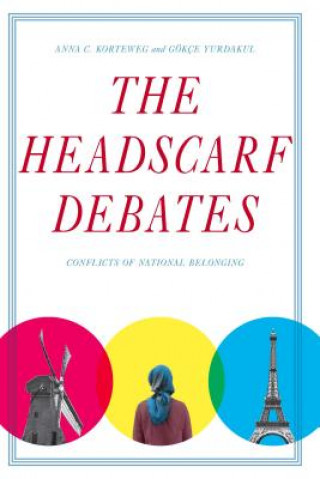
The headscarf is an increasingly contentious symbol in countries across the world. Those who don the headscarf in Germany are referred to as "integration-refusers." In Turkey, support by and for headscarf-wearing women allowed a religious party to gain political power in a strictly secular state. A niqab-wearing Muslim woman was denied French citizenship for not conforming to national values. And in the Netherlands, Muslim women responded to the hatred of popular ultra-right politicians with public appeals that mixed headscarves with in-your-face humor. In a surprising way, the headscarf--a garment that conceals--has also come to reveal the changing nature of what it means to belong to a particular nation. All countries promote national narratives that turn historical diversities into imagined commonalities, appealing to shared language, religion, history, or political practice. "The Headscarf Debates" explores how the headscarf has become a symbol used to reaffirm or transform these stories of belonging. Anna Korteweg and Gokce Yurdakul focus on France, Germany, and the Netherlands--countries with significant Muslim-immigrant populations--and Turkey, a secular Muslim state with a persistent legacy of cultural ambivalence. The authors discuss recent cultural and political events and the debates they engender, enlivening the issues with interviews with social activists, and recreating the fervor which erupts near the core of each national identity when threats are perceived and changes are proposed. "The Headscarf Debates" pays unique attention to how Muslim women speak for themselves, how their actions and statements reverberate throughout national debates. Ultimately, "The Headscarf Debates" brilliantly illuminates how belonging and nationhood is imagined and reimagined in an increasingly global world.


Informácie o knihe
Angličtina
Kategórie

Darujte túto knihu ešte dnes
Je to jednoduché
1 Pridajte knihu do košíka a vyberte možnosť doručiť ako darček 2 Obratom Vám zašleme poukaz 3 Knihu zašleme na adresu obdarovanéhoMohlo by vás tiež zaujímať


 /
Pevná
39.25
€
/
Pevná
39.25
€









Ahoj! Som Libroamiko, tvoj knižný radca.
Ako ti môžem pomôcť?