
 Kontakt
 Ako nakupovať
Doručenie
Nákupný poradca
 Angličtina
 30 b
30 b
Až 30 dní na vrátenie tovaru

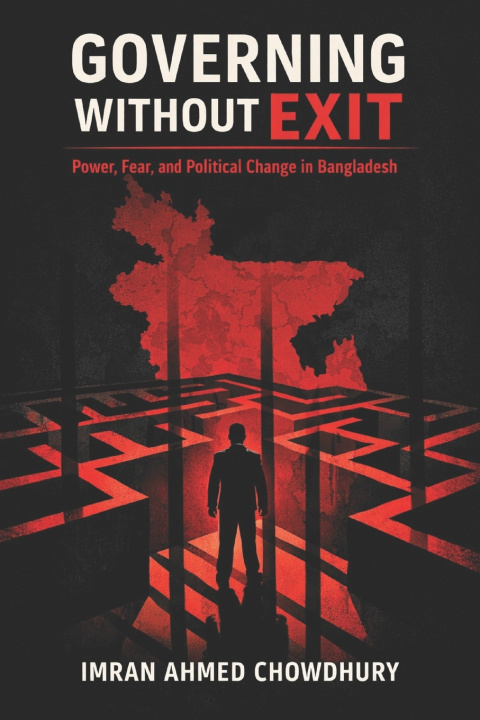
Why Bangladesh Matters Beyond Its Borders
Bangladesh is often described in numbers: population size, growth rates, garment exports, climate vulnerability. It appears in global discourse as a country of scale rather than significance-a place that matters because of how many people live there, how cheaply they work, or how precariously they exist on the frontlines of climate change. Rarely is Bangladesh treated as what it truly is: one of the most instructive political laboratories of the post-colonial world.
This book begins from the premise that Bangladesh matters not only to its own citizens, but to anyone concerned with how states emerge from colonialism, how power consolidates after liberation, and why democratic aspirations so often wither under the weight of fear. Bangladesh is not an anomaly. It is a pattern-compressed, accelerated, and therefore revealing.
In the arc of Bangladesh's history lie questions that transcend geography: Why do nations born in moral clarity struggle to institutionalise restraint? Why do rulers in fragile democracies cling to power even when legitimacy erodes? And why, despite repeated uprisings, elections, and promises of reform, does peaceful transfer of power remain so elusive?
Bangladesh as a Post-Colonial Mirror
Bangladesh was not born incrementally. It was born violently, decisively, and publicly. Its independence in 1971 was the outcome of genocide, mass displacement, and a war that drew the attention of the world. Unlike many post-colonial states that emerged through negotiated withdrawal or elite compromise, Bangladesh emerged through rupture. This gave it an unusually strong moral foundation.
Yet that same rupture deprived it of something equally vital: continuity. Institutions did not evolve; they had to be invented amid chaos. Political culture did not mature gradually; it was forged under pressure. The result was a state that possessed legitimacy without insulation-authority without buffers.
This is where Bangladesh becomes instructive. It demonstrates how post-colonial states can fail not because they lack ideals, but because they lack mechanisms to protect those ideals from power itself. Bangladesh shows how liberation movements, once victorious, can struggle to transition from moral authority to constitutional humility.
The Bangladeshi experience challenges a comforting assumption often made in international policy circles: that democracy naturally follows independence, and that elections alone can consolidate it. Bangladesh has held elections. It has adopted constitutions. It has alternated between civilian and military rule. Yet the deeper democratic deficit persists-not in procedure alone, but in political psychology.
Failure and Resilience, Side by Side
To describe Bangladesh solely as a failed state would be inaccurate and intellectually dishonest. It has endured. It has grown. It has delivered measurable development under adverse conditions. Its society has demonstrated extraordinary resilience in the face of war, famine, political violence, and environmental threat.
This coexistence of failure and resilience is precisely what makes Bangladesh significant. It has not collapsed, yet it has not stabilised democratically. It functions, yet it does not fully trust itself. Its economy grows, while its political culture hardens. Its citizens adapt, even as institutions stagnate.
Bangladesh therefore occupies a critical middle space-between collapse and consolidation. This is the space in which many contemporary states now reside: outwardly stable, inwardly brittle. In such states, power does not fall easily, but neither does it rest securely. Authority becomes anxious. Opposition becomes existential. Politics becomes zero-sum.


Informácie o knihe
Angličtina
Kategórie

Darujte túto knihu ešte dnes
Je to jednoduché
1 Pridajte knihu do košíka a vyberte možnosť doručiť ako darček 2 Obratom Vám zašleme poukaz 3 Knihu zašleme na adresu obdarovanéhoAhoj! Som Libroamiko, tvoj knižný radca.
Ako ti môžem pomôcť?