
 Kontakt
 Ako nakupovať
Doručenie
Nákupný poradca
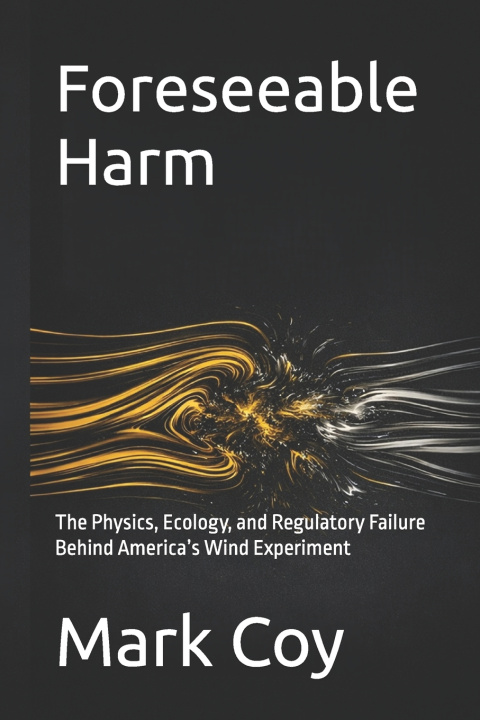
Foreseeable Harm
The Physics, Ecology, and Regulatory Failure Behind America's Wind Experiment
 Angličtina
 18 b
18 b
 Nové
Nové
30 dní na vrátenie tovaru

The evidence is clear. The consequences are measurable. The harm is accelerating.
Foreseeable Harm is a concise examination of how industrial wind development has expanded without responsible ecological oversight, and what must change to prevent further damage. Drawing on federal research, statutory authority, and field evidence, the book argues that when impacts are documented, modeled, and repeatedly raised, the resulting harm is not an accident. It is foreseeable.
Mark Coy traces how federal subsidies, fragmented regulation, and a voluntary permitting culture created a system that places protected species, local communities, and even the atmosphere at risk. He examines the roles of the United States Fish and Wildlife Service, atmospheric science agencies, Congress, and state and local governments, showing that each holds clear authority and that this authority has often been deferred, delegated, or diluted instead of exercised.
This is a book about responsibility. It explains who must act, what structural changes are required, and why the current model of wind development is not sustainable. With plain language and a focus on institutional behavior, Foreseeable Harm gives readers a framework for understanding cumulative impacts, kinetic energy extraction, and the limits of what landscapes and species can absorb.
In a policy arena shaped by slogans and inevitability narratives, Foreseeable Harm argues for something more demanding: stewardship that begins with seeing the harm in front of us and choosing to prevent it.


Informácie o knihe
Angličtina
