
 Kontakt
 Ako nakupovať
Doručenie
Nákupný poradca
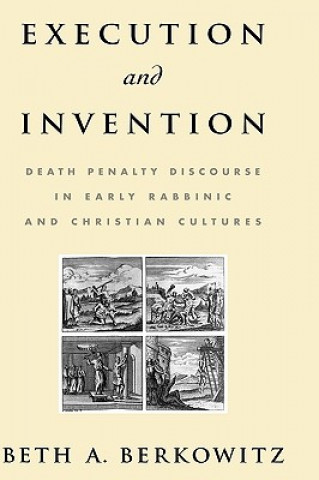
Execution and Invention
Death Penalty Discourse in Early Rabbinic and Christian Cultures
 Angličtina
 258 b
258 b
Až 30 dní na vrátenie tovaru
Zákazníci tiež kúpili









The death penalty in classical Judaism has been a highly politicized subject in modern scholarship. Those wishing to defend the Talmud from Enlightenment attacks on its legitimacy pointed to Talmudic criminal law as evidence for its elevated, progressive morals. But even more pressing was the need to prove the Jews' innocence of the charge of being Christ-killers. This charge hinged on the reconstruction of the ancient Jewish death penalty. The Gospels show a corrupt Jewish court as responsible for the death of Christ. Contemporary Jewish scholars have argued that the Mishnah's criminal law is in fact rigorously just and even abolitionist with respect to the death penalty. In this book Beth Berkowitz tells the story of modern scholarship on the ancient rabbinic death penalty and continues the story by offering a fresh perspective using the approaches of ritual studies, cultural criticism, and talmudic source criticism. Against the scholarly consensus, Berkowitz argues that the rabbinic laws of the death penalty were used by the early Rabbis in their efforts to establish themselves in the wake of the destruction of the Temple. The purpose of the laws, she contends, was to create a complex ritual of execution that was controlled by the Rabbis, thus bolstering their claims to authority in the context of Roman imperial domination.


Informácie o knihe
Angličtina

Darujte túto knihu ešte dnes
Je to jednoduché
1 Pridajte knihu do košíka a vyberte možnosť doručiť ako darček 2 Obratom Vám zašleme poukaz 3 Knihu zašleme na adresu obdarovanéhoMohlo by vás tiež zaujímať









 /
/
 Brožovaná
 22.65
€
22.65
€



 /
Pevná
28.62
€
/
Pevná
28.62
€

 /
Pevná
144.64
€
/
Pevná
144.64
€










Ahoj! Som Libroamiko, tvoj knižný radca.
Ako ti môžem pomôcť?