
 Kontakt
 Ako nakupovať
Doručenie
Nákupný poradca
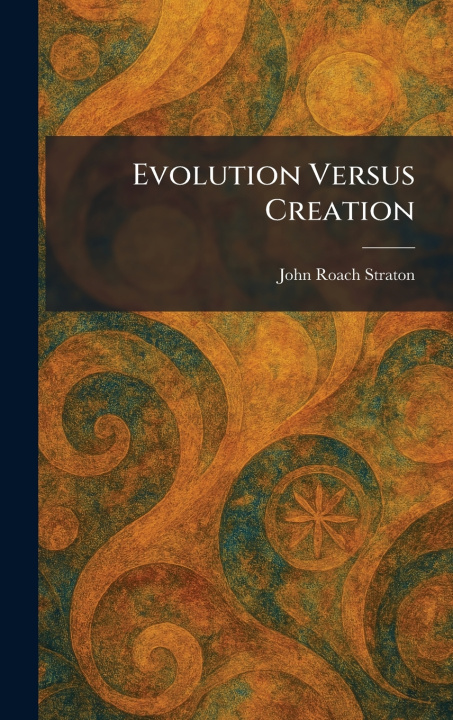
Evolution Versus Creation
 Angličtina
 71 b
71 b
30 dní na vrátenie tovaru

"Evolution Versus Creation" is a significant historical document that captures one of the most defining intellectual conflicts of the early twentieth century. Written by the influential fundamentalist preacher John Roach Straton, this work presents a vigorous defense of biblical creationism against the burgeoning scientific acceptance of evolutionary theory. Straton explores the profound philosophical and moral questions at the heart of the debate, arguing that the stakes involve nothing less than the foundations of faith and social order.
The text serves as a primary source for understanding the religious climate of the 1920s, a period marked by high-profile legal and cultural battles over education and theology. Straton's arguments reflect the concerns of a segment of the American public who felt that Darwinism threatened traditional values and the spiritual integrity of the nation. For readers interested in the history of science and religion, "Evolution Versus Creation" offers a compelling look at the rhetoric and reasoning used to challenge the modern scientific consensus during a transformative era in religious thought.
This work has been selected by scholars as being culturally important, and is part of the knowledge base of civilization as we know it. This work was reproduced from the original artifact, and remains as true to the original work as possible. Therefore, you may see the original copyright references, library stamps (as most of these works have been housed in our most important libraries around the world), and other notations in the work.
This work is in the public domain in the United States of America, and possibly other nations. Within the United States, you may freely copy and distribute this work, as no entity (individual or corporate) has a copyright on the body of the work.
As a reproduction of a historical artifact, this work may contain missing or blurred pages, poor pictures, errant marks, etc. Scholars believe, and we concur, that this work is important enough to be preserved, reproduced, and made generally available to the public. We appreciate your support of the preservation process, and thank you for being an important part of keeping this knowledge alive and relevant.


Informácie o knihe
Angličtina
Kategórie
