
 Kontakt
 Ako nakupovať
Doručenie
Nákupný poradca
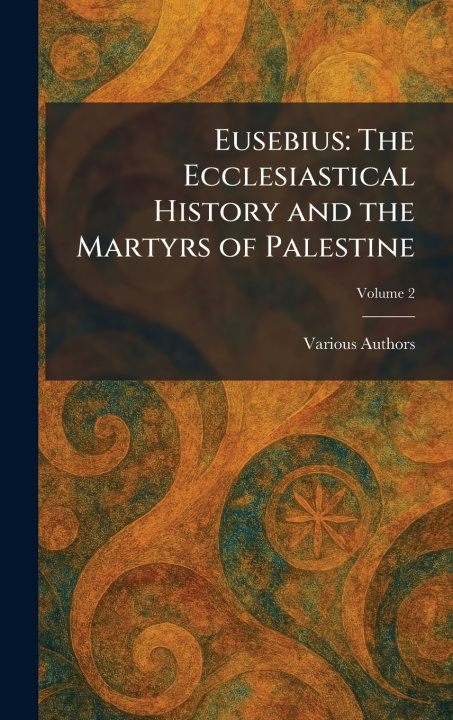
EUSEBIUS
THE ECCLESIASTICAL HISTORY AND THE MARTYRS OF PALESTINE
 Angličtina
 84 b
84 b
30 dní na vrátenie tovaru

"Eusebius: The Ecclesiastical History and the Martyrs of Palestine" stands as a monumental pillar of early Christian historiography. Written by Eusebius of Caesarea, often hailed as the "Father of Church History," this work provides an indispensable record of the Christian Church from its apostolic beginnings to the early fourth century. This second volume offers a deep exploration of the development of Christian doctrine, the succession of bishops, and the significant events that shaped the faith during its formative centuries.
A central feature of this text is the detailed account of the "Martyrs of Palestine," which chronicles the intense persecutions faced by believers during the reign of Diocletian. Eusebius meticulously documents the lives and deaths of those who bore witness to their faith, utilizing both eyewitness accounts and archival materials. By presenting a narrative of resilience and divine providence, the work illustrates the Church's transformation within the Roman Empire. This historical account is an essential resource for scholars and readers interested in theology, ancient history, and the enduring legacy of the early Christian martyrs.
This work has been selected by scholars as being culturally important, and is part of the knowledge base of civilization as we know it. This work was reproduced from the original artifact, and remains as true to the original work as possible. Therefore, you may see the original copyright references, library stamps (as most of these works have been housed in our most important libraries around the world), and other notations in the work.
This work is in the public domain in the United States of America, and possibly other nations. Within the United States, you may freely copy and distribute this work, as no entity (individual or corporate) has a copyright on the body of the work.
As a reproduction of a historical artifact, this work may contain missing or blurred pages, poor pictures, errant marks, etc. Scholars believe, and we concur, that this work is important enough to be preserved, reproduced, and made generally available to the public. We appreciate your support of the preservation process, and thank you for being an important part of keeping this knowledge alive and relevant.


Informácie o knihe
Angličtina
